Friday, 31 May 2024

OS Map Reading Week

This will take place in the first week back after half term... we will be doing some suitable activities...


Tuesday, 28 May 2024

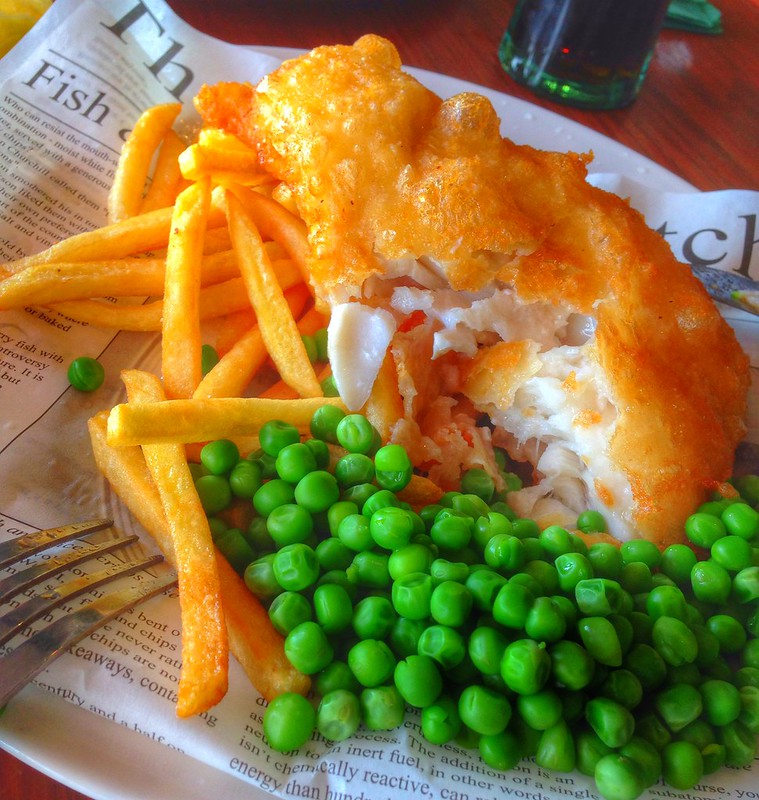
New Fish and Chips resource


I've developed this activity for Year 7, as part of our unit on food geographies called 'Food for Thought'.

It's shared here without commentary or additional resources, which we've developed to help steer the lesson.

It explores the rising price of food by focussing on one meal - a classic of UK food culture. It connects with conflict, climate change, globalisation and so much more.

Card Sequencing Activity Sheet for an exploration of why Fish and Chip prices are going up so much.

Read the cards and classify / sequence / group them.


Card Sequencing Follow up Sheet - to help answer the question...

Tuesday, 21 May 2024

Mr. P heading to Cologne


The third running of the Practical Pedagogies conference will take place in November 2024. The first two events were rather great - one in Toulouse and one in Cologne.

This event will take place in Cologne once again.

The keynote speaker who will bookend the event is Hywel Roberts. He was awesome. His book 'Bothereredness' has been published since the last event, when he was sharing some of the ideas behind it, and comes highly recommended.


You can find out how to get your Early Bird ticket and also see the full programme (subject to the addition of other sessions) on the link above as well. There are over 120 sessions. They are all presented by teachers / educators, sharing what they do with colleagues. You will see session from Richard Allaway and Matt Podbury and quite a few other familiar names here.

My session is here, as described. It will take place on the 1st day of the conference.


Early Bird tickets available in limited quantities which are 100 Euros cheaper than the normal price.

Saturday, 11 May 2024

GA Model Making Competition

The GA has just announced a new model-making competition. 
Geographers like making 3D models of physical landforms in particular. We may give this a go.

A little like my classic "landscape in a box" idea... an example shown here...

Geographical Model Making Competition: My local area


Theme: My local area

Design and make a geographically- themed 3D model of a key feature of your local area using reused or waste cardboard as the main material supported with other recycled materials. 

Examples of subjects for your model could be your community centre, sports venue, place of worship, school, local farm, coastline, river or hill).

Create your model showing a concept/geographical idea that interests you (for example, change, processes, development, conflict, diversity, power, inter-dependence)

The colours you use may come from the recycled materials themselves or coloured pencils or paints that you may already have at home or at school. There is no need to buy new materials to colour your model.

You may wish to include labels on your model.


There are three categories for entries.

Two categories for Individual entries:
KS2 (Years 3, 4, 5, 6)
KS3 (Years 7, 8, 9)
One category for a group entry (any sized group from 2 students or more):KS2 (Years 3, 4, 5, 6)


How to enter

Section 1: Take two photographs of the model (an oblique/profile/side view and an aerial/bird’s eye/view from above)

Section 2: Type (or take a photograph of handwriting) up to 300 words to:
  • describe your feature and how you have represented it (for example, what is your model showing and what you have made it out of)
  • explain your geographic concept/idea (for example, explaining what the concept/idea is, what is happening in your local area / feature because of this concept/idea, what your views are about it)

Section 3: Your personal details (name or names if a group entry, key stage, year group, school name and address and your parent’s or guardian’s email address)

Section 4: Parental/guardian permission form


Read the competition terms and conditions here

Download the entry form here

Download the parental consent form here

Visit the page here and click the SUBMIT button to send in your entry for the competition - good luck!


Example

This is a new competition, so we have created a brief example to help explain how you can photograph, describe and explain your entry. We would like you to use more detail in your model than we have, but it helps to show the two photographs you will need to submit.


My model is of Mad Jack Fuller’s Pyramid tomb near my home in Brightling in Sussex. I made it out of card which some deliveries came in and used Sellotape and glue to stick it together. It is 20cm high and 10cm wide, but in real life it is 7.62 m high, and it was built in 1811 out of sandstone.

It is important geographically today because it is the starting point for an 11km walk along public footpaths and through an Area of Outstanding Natural Beauty (AONB) and when we go for a walk we look out for John Fuller’s five other buildings, called follies, which is very fun to do. They were built to help enhance the beautiful local landscapes and on our walks we can see lots of different scenery, including ponds, a cricket ground and woods.

Large numbers of people come from across South East England (and even further away!) every year for the walks and to take photographs of the follies and they help businesses in my local community for example by visiting the cafes. But, sometimes I think there are too many people around as there are lots of people on the footpaths and they get very muddy, which is damaging for the grass and animal’s habitats.

I like the Pyramid the most of the follies because it is surprising to find a pyramid shaped tomb in the UK, as you would expect to see them in Egypt! It is a very important part of my local community and we took part in fundraising events to help pay for its restoration. In 2023 its restoration was finally finished.


Judging criteria


These are the things that the judges will be looking for in each entry:
  • Geographical relevance of the place represented by the model
  • Detailed and geographically written explanation
  • Originality and creativity of the model
  • Quality and design of the model build

The GA will send out awards to the winners and runners up
Awards announced on social media by the GA.

The RGS also has some guidance on model-making. Dudley Stamp, a former GA President had a large collection at one stage.

Wednesday, 1 May 2024

200 000 page views

I've now passed the 200 000 page views mark. Thanks for visiting and reading.

A new role for me at the RGS-IBG

I've been connected with the RGS-IBG for quite a number of years in various ways, as were quite a few other former GA Presidents. 

I'm now about to strengthen those connections a little more.

In 2007 I became a Fellow of the RGS and Chartered Geographer (Teacher) and have been ever since.

In 2008, I was awarded their Ordnance Survey Award for excellence in Secondary Geography Teaching. This was a proud moment and came at the culmination (I thought) of my teaching career as I was joining the Geographical Association and stepping out of the classroom. I didn't realise I'd be back again within five years.

I had also spoken at the RGS as part of a student day - with Alastair Owens actually - although I only found that out much later when digging through some old papers. It's a wonderful thing to stand on the stage in the Ondaatje Theatre where so many greats have stood before. We also took students there for a range of events, and I took part in an event representing the Guardian / DfE once as well. I ended up having lunch with Nicholas Crane and have bumped into all sorts of explorers and 'celebrity' geographers at times in the lunch area.

Between 2008 and 2011 I worked closely with the RGS - particularly Steve Brace - who is now the GA Chief Executive of course, and Claire Wheeler (now Claire Brown) along with the rest of their APG team as part of the Action Plan for Geography. This meant regular meetings at either the RGS or Solly Street at a time when Michael Palin was president.

From 2011 onwards for several years I contributed resources to the RGS website, thanks to Steve Brace. This included:

- From the Field resources - working with PhD researchers to translate their work into the classroom

- 'A' level / fieldwork materials funded by a Data Skills project

- a resource on Hunstanton's famous stripy cliffs

- the education materials for Felicity Aston's Going Beyond funded trip to the Pole of Cold - these won an award from the SAGT.

If you are a fellow, you will have received your electronic 'ballot paper' for the elections for Council for June 2024 and will perhaps have noticed that I have put myself forward for the post of Vice President: Education. I had to keep this to myself for a while.

This blog post would have been a request to vote for me in an election, but as it turned out I stood unopposed, so will be confirmed in this role at the AGM of the RGS in June, the same day as the RGS's Awards are handed out.

From June I shall therefore be taking on the role of Vice President: Education at the RGS and have a place on RGS Council for a four year term of office.

Thanks to the fine people who proposed me for the position, including a Polar explorer and some very excellent geography teacher colleagues.


Thanks also must go to my predecessor as VP Education: Mel Norman, who has also been closely associated with the Geographical Association. She Chaired and was Co-Chair/Secretary of the GA's Education Group and was also editor of 'Teaching Geography' for a lengthy period. 

She taught PGCE Geographers for many years - I visited her cohorts a few times while working for the GA - and is also closely associated with the organisation of the Charney Manor Primary Geography Conference. I'm hoping she will pass on more of her wisdom, much as she did when I started my GA Presidency. Speaking of which, Mel is one of those people who has not been GA President (yet) but would be fantastic in the role. She has received awards from the GA for her work in a range of spheres.

If you're going to be at the AGM / Awards or reception in the evening it would be fantastic to catch up. 

I shall be back with more requests as I get started on the role in the summer. 

I look forward to working with all the various Council and committee members, RGS staff and the new incoming President Professor Dame Jane Francis, who received the RGS's Patron's Medal in 2022.

There is work to be done to ensure that all the ongoing support that the RGS offers for teachers meets their needs, and continues to be responsive and inclusive to the changing needs of the profession. I'm excited to offer my support in various ways.

Image: Sam Parkinson