Ahead of another new academic year, it's been time to refresh the topics we teach. We've changed things around a little and dropped a topic to make space for others to stretch out a little, and have some flexibility for other events which may or many not happen.
Here's our Curriculum Journey from Y6-Y8, after which the students move up to Senior School.
We have a separate diagram for Y3-5 Geography which I'm still updating.
Thanks to the person who produced the original template whose identity I have lost over the years... if you recognise it please let me know and I'll add a credit to the post.
Growing up in Yorkshire, Friday was generally "chippy tea" night.
We were lucky to have some decent chippies in the village where I grew up. My parents' house was at one stage about 2 minutes walk from the XL Chippy which was decent and did scallop fish cakes - which any northerner will tell you is NOT a fishcake.
I checked on Street View and it's now a seafood restaurant upstairs.
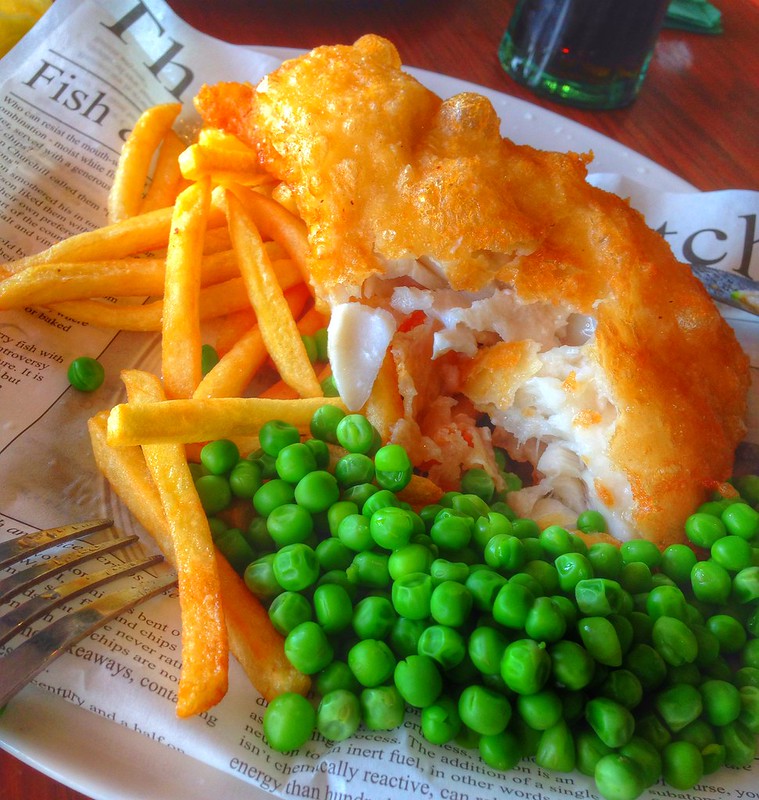
Image: Alan Parkinson
I've got a reasonable collection of food-related books that reference the cultural importance of fish and chips as part of our identity, but also a meal that we owe to migrants: Portuguese and Jewish amongst others, as well as the arrival of the potato from South America and the risks taken by fishing boats in the waters around Iceland or even further north.
It's worth exploring the story of Fish and Chips.
I've produced a resource on this topic, which I've shared previously elsewhere.
It needed a little update for the 2026 situation.... and I've now completed that.
My daughter lives there, and it's one of the places that I am considering with my wife for where to retire to. So don't tell everyone how nice it is... too late...
This Guardian article explores the changes in the High St, including the increasing numbers of vape shops. These have been joined by a prevalence of bookmakers (betting shops - some students think you mean places that make books) and pawnbrokers (that one might needs some explaining too...)
From the article:
The study, conducted by researchers at Health Equity North, looked at Ordnance Survey data to track how amenities had changed between 2014 and 2024. The amenities were divided into those seen as “health promoting”, such as pharmacies, libraries and supermarkets, and “health reducing” such as vape shops, bookmakers, takeaways and alcohol-only outlets.
They found a stark decline in healthier amenities, with unhealthy alternatives taking their place. Takeaway shops were up by almost a quarter (24%) across England, while the number of banks and building societies decreased by 40%, and supermarkets by 10%.
The report found there were stark regional divides across England regarding high-street amenities, with twice as many vape shops in the north of England. The number of takeaways in the north of England rose by a third (31%), compared with a rise of 18% in the south.
There were three times as many vape shops in deprived areas compared with the least deprived ones. Deprived areas also had 25 times more pawnbrokers and more than three times as many bookmakers.
Dr Eman Zied Abozied, research associate at Newcastle University Population Sciences Institute, said the study showed that high streets were becoming “less healthy and welcoming places to visit”.
We will be refreshing our Year 7 fieldwork for the new academic year.
My 11th year is now over and this is the first week of the summer holidays. I've already been quite busy with some external projects and PGQM moderation, and work related to my new RGS role.
One of my jobs is to finalise some documents ahead of the arrival of our new headteacher, who wants to get up to speed on our curriculum across the Prep school.
This is our newly updated Curriculum journey / roadmap for the new academic year.
It's written by Julian Baggini, who wrote a book which was one of the key inspirations for my EverydayGeographies conference theme with his exploration of life in the "most average postcode" in the UK: S66 where I grew up.
This would be good for those studying the 'A' level Changing Places topic.
Also good on indigenous connections with landscapes such as rivers in New Zealand and the importance of a sense of place and belonging. I can see myself returning to this one for a number of different topics.
Also (re) introduced me to the late Roger Scruton's idea of oikophilia
Perhaps the most interesting element of Scruton’s brand of conservatism was his emphasis on the love of home, what he called “oikophilia.” Oikos, from which we take our word economy, means the household and names the order and guidance of a home. It is the private world of a family, but by extension also of a village, a people, or an ethnicity. In Scruton’s use, oikophilia is a principle of value for the small, the local, and the private that stands against universalism.
I've developed this activity for Year 7, as part of our unit on food geographies called 'Food for Thought'.
It's shared here without commentary or additional resources, which we've developed to help steer the lesson.
It explores the rising price of food by focussing on one meal - a classic of UK food culture. It connects with conflict, climate change, globalisation and so much more.
Card Sequencing Activity Sheet for an exploration of why Fish and Chip prices are going up so much.
Read the cards and classify / sequence / group them.
Card Sequencing Follow up Sheet - to help answer the question...
26-year-old Aldwyn Roberts from Trinidad was onboard and listed his occupation as ‘Artist’. He was a calypso singer and is better known by his stage name, ‘Lord Kitchener’. During the journey, he wrote the song ‘London is the Place for Me’, which he performed on the ship’s arrival to Tilbury.
Mona Baptiste was similarly from Trinidad and was 21 when she travelled on the ship. Although her occupation was listed as ‘Clerk’ in the passenger list, she was a blues singer and went on to have a successful career in the music and broadcasting industries.
Visit the Windrush Foundation website for a whole range of free resources for educational use. These are going to be rolled out over the next year.
A free event will take place to launch these.
SUNDAY 21 JANUARY 2024, 7pm to 9pm
This free online event launches a year-long rollout that will offer opportunities to schools in Britain, and elsewhere, first-hand knowledge of the late Sam King’s seminal work. The suite of seven resources will show Windrush as just one, among many other chapters, of British post-WWII history. The resources include more than 500 pages of materials, and feature stories also of the lived experiences of Windrush passengers. Further research and publications will follow.
Members of the Windrush Generation are those who arrived on June 22, 1948, at Tilbury Docks, on the Empire Windrush, but excludes passengers who arrived after June 1948 on other ships or by BOAC (BA).
The Empire Windrush made only one return journey to the West Indies in 1948. Windrush Foundation’s seminal education resources will help educators to teach the facts about Windrush and will explain its true meaning. Numerous distortions of the late Sam King’s idea have been publicised over the years and it is hoped that this suite of resources will debunk those falsehoods and conflations.
The eruption appears to be occurring exactly along the old crater line of Sundhnúkagígar (which is an old fissure) indicating that the magma likely exploited this weakness in the crust to find a way to the surface as it neared the surface (as indicated by the frequent earthquakes in the Grindavik area for the last few months).
There will be lots of people concerned about their flights and others who will be desperate to head out there, with flight prices likely to have been hiked with the news. The official line is that there are no disruptions to flights to and from Iceland and international flight corridors remain open.
Brendan Conway was quick off the mark with a web map using Vedurstofan map data. Thanks also to Ben Hennig of course for some quick responses despite the fact that he is thousands of miles away.
Some information on the resilience of the population:
Excellent information about the steps Iceland is able to take manage the impact of tectonic hazards, for those who use it as a #geography case study. https://t.co/C84lLdjUK1
What is the place you call home? Is it in the UK or outside?
“Cynefin” is a Welsh term defined by Curriculum for Wales as 'the place where we feel we belong, where the people and landscape around us are familiar, and the sights and sounds are reassuringly recognisable.’
Although it can be translated to “habitat” in English, “cynefin” is not just the area in which we live; It is often used to describe the relationship between people and the natural world, and how our connection to our surroundings can shape our sense of identity and well-being.
Cynefin is also used in the broader sense of community, culture, heritage and identity. It is a holistic concept that encompasses the physical, social, cultural, spiritual and economic dimensions of a place, and how these dimensions interact with each other. It is seen as the historic, cultural and social space which is shaped and defined by the community that inhabits it.