A useful video for Y9s as we move from the causes of and evidence for climate change to the potential impacts of the enhancement of the greenhouse effect as a result of climate forcings...
Showing posts with label Year 9. Show all posts
Showing posts with label Year 9. Show all posts
Friday, 14 May 2021

Thursday, 1 April 2021
Young Geographer of the Year Competition 2021
It's time for the RGS-IBG Young Geographer of the Year Competition once again. Last year, this formed part of our lockdown learning and resulted in some good outputs and entries. We will be inviting you to take part in the competition again and providing some guidance in the next term, while being especially mindful of the impact on our own school community.
We are delighted to announce that our Young Geographer of the Year Competition, organised in partnership with @GeographicalMag, is open! Pupils are encouraged to create and submit an annotated map revealing how their lives have been shaped by COVID-19. https://t.co/lsU6EMUQWF pic.twitter.com/lhqu5feHFC
— RGS-IBG Schools (@RGS_IBGschools) April 1, 2021

This year the title is 'Remapping our Lives'.
For this year’s Young Geographer of the Year competition the RGS-IBG are asking young people to create an annotated map which reveals how their lives have been shaped by the Covid pandemic.They are are interested to see maps which illustrate and describe:
- Which local human and physical features they and their family used during the pandemic
- Why some places were especially important to young people
- The places they couldn’t visit and why
- If the pandemic has led to them experiencing any new places in their local area
- How the pandemic changed their geographical understanding of their local area
- Any links which ‘stretch’ their maps to other places which were also important to them during the pandemic
The competition has four categories as usual:
- Key Stage 2 (pupils aged 7-11)
- Key Stage 3 (pupils aged 11-14)
- Key Stage 4 or GCSE (pupils aged 14-16)
- Key Stage 5 or A Level (pupils aged 16-18)
The deadline for receipt of all entries is Thursday 22 July 2021 at 5.00pm.
Sunday, 21 February 2021
Rwanda - how to make a word cloud
Starting a short unit on Rwanda with Y9 this week.
One task is to create a word cloud in the shape of Rwanda.
Instructions here by Mr P
Here's the Rwanda outline shape that you need too:

Source: https://vemaps.com/ - well worth a look
Wednesday, 10 February 2021
Age-Sex Pyramids
A few issues with these of course, but this is a helpful video,
Population pyramid from Ined on Vimeo.
The population includes males and females of all ages.
To see at a glance how they are distributed by age and sex, demographers use a population pyramid. But, as you will see, it doesn't always have a pyramid shape. And how do we build one?
Crédits
Designed by : Gilles Pison et Sabine Belloc
Multimedia Project Manager : Thierry Jori
Produced by : SO2 Media
An animation of the French National Institute for Demographic Studies and of Cité des sciences et de l'industrie
Thursday, 17 December 2020
Ella and air pollution
For those Year 9s who have been following this story as we suggested. The sad story of Ella and her parents' fight to have air pollution added as the cause of her death.
This Guardian article outlines the outcome.

Remember that your teachers will have given you a date by which we would like you to submit your final reports. Data and graphs have been provided based on the 300 data points that Y9 cumulatively collected.
Monday, 7 December 2020
Tuesday, 9 June 2020
Wednesday, 8 January 2020
Middle East Conflicts
This is certainly an important time to be teaching about the Middle East and the conflicts there.
We started to explore the origins of the conflict in Syria today, with a look at the Middle East in general and some of the drivers of conflict, including borders, the Arab Spring, the presence of oil, the idea of a proxy war, non-state actors etc. Challenging stuff.
Here's a VOX video giving one perspective...
We mentioned the incidents between Iran and the USA over the last few days and some of the tweets sent by Trump, and the response by Iran yesterday...
We started to explore the origins of the conflict in Syria today, with a look at the Middle East in general and some of the drivers of conflict, including borders, the Arab Spring, the presence of oil, the idea of a proxy war, non-state actors etc. Challenging stuff.
Here's a VOX video giving one perspective...
We mentioned the incidents between Iran and the USA over the last few days and some of the tweets sent by Trump, and the response by Iran yesterday...
Saturday, 23 November 2019
Superpowers - Part 2
Hard and Soft Power is the focus for this lesson and activities.
We started by defining these terms, using examples.
The basic difference is between coercion and persuasion, and we provided some analogies to situations like classrooms.
I found this an interesting example.
We started by defining these terms, using examples.
The basic difference is between coercion and persuasion, and we provided some analogies to situations like classrooms.
I found this an interesting example.
Monday, 18 November 2019
Superpowers - Pt. 1
Superpowers is our new Year 9 unit, which was started last week with most groups.
It starts by defining SuperPowers and moving on to how they exert their power.
This can include military, economic, political and cultural power.
Some of this power is Hard and some is Soft.
British Council report on Soft Power, particularly cultural power (PDF download) is a useful resource to explore what we mean by this term.

It starts by defining SuperPowers and moving on to how they exert their power.
This can include military, economic, political and cultural power.
Some of this power is Hard and some is Soft.
British Council report on Soft Power, particularly cultural power (PDF download) is a useful resource to explore what we mean by this term.

Sunday, 20 October 2019

Saturday, 19 October 2019
Superpowers and Conflict - some planning
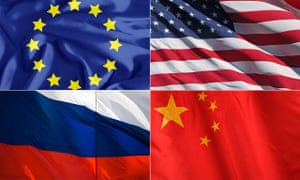
After half term, we are going to be exploring a new unit on Conflict connecting with the idea of Superpowers.
This is a development of our existing unit, but with a new focus and some new resources.
I've mined a few bits from Google Drive, TeachitGeography and some earlier work by Simon Oakes.
This weekend, the Guardian published a piece by Simon Tisdall on the possible new superpowers of the next part of the 21st Century.
This is a timely piece for us.
We also have a class set of the new illustrated version of 'Prisoners of Geography'.
We'll be exploring the Arctic and have Klaus Dodds' book, and will look at Russia's interests in this emerging resource frontier...
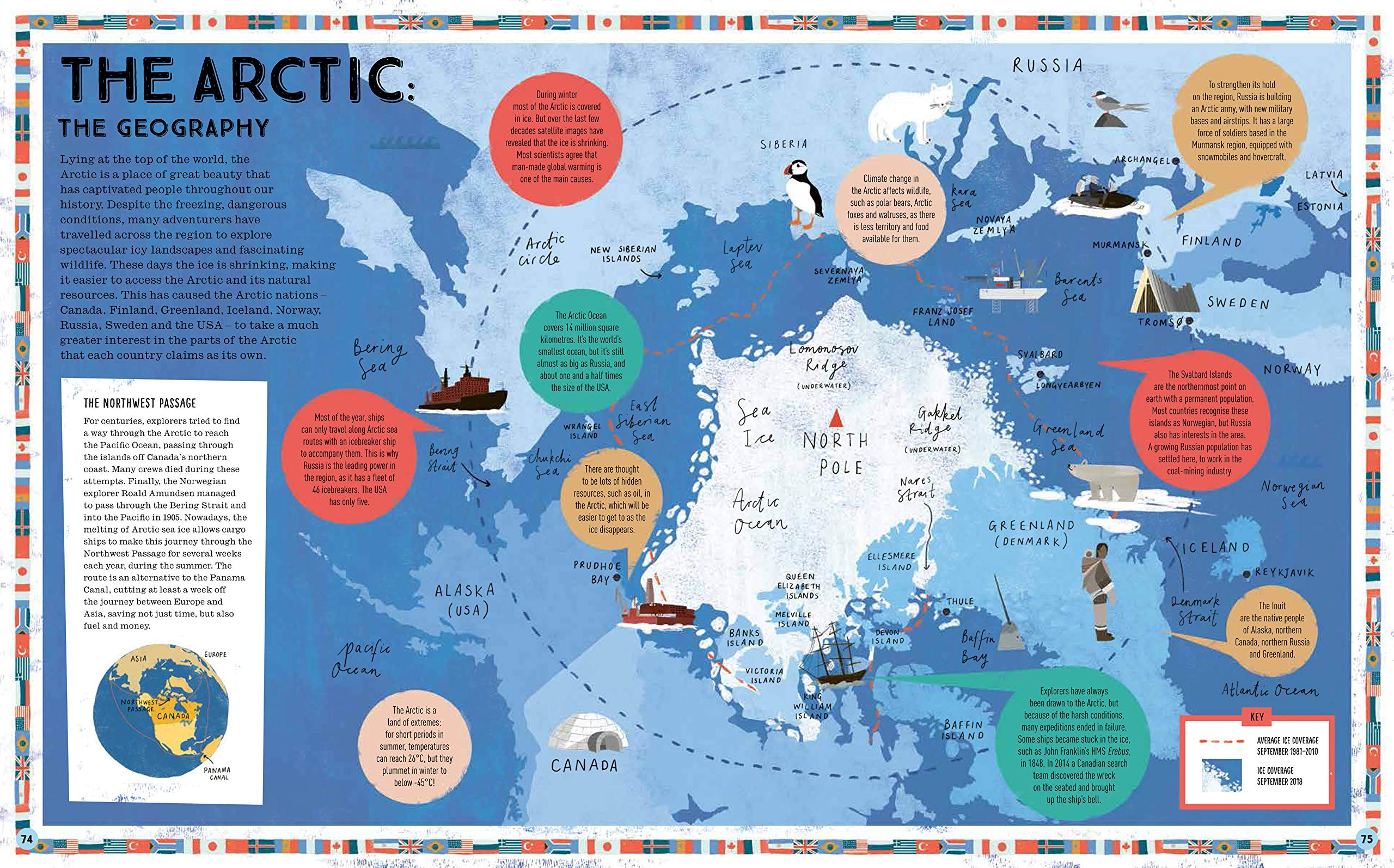
Will share the resources that I contribute and some outcomes in the next half term.
A few links from the
Fair Observer - a new 'Cold War' in the Arctic?
Is it time to draw borders on the Arctic Ocean? - an excellent Vox piece.
Russia has interests in the Arctic, and is building a fleet of icebreakers.
I've also started a new Pinterest board.
One real concern for many is that Russia is taking climate change seriously and preparing for the implications of it, spending many millions of pounds, whereas the USA has a climate denier in charge.... strategically a bad idea.
Vox - Ring of Fire video
Useful for Year 9s completing their exploration of what makes Indonesia a dangerous place to live.
Wednesday, 4 September 2019
Banda Aceh
Year 9 were introduced to the Banda Aceh tsunami today....
This video shows the aftermath... some chilling parallels with some of the footage now coming out of the Bahamas after Hurricane Dorian.
Tsunami from Sasa Petricic on Vimeo.
This video shows the aftermath... some chilling parallels with some of the footage now coming out of the Bahamas after Hurricane Dorian.
Tsunami from Sasa Petricic on Vimeo.
Thursday, 16 August 2018
Wednesday, 9 May 2018
KES Student Science Review
 The 2nd edition of the Student Science Review is available to read here. It's published using ISSUU.
It includes an example report from last year's joint Physics / Geography project which explored how Ely might be rebuilt in a more sustainable fashion following its 'destruction' by a fictional tsunami.
Those of you currently in Year 9 will be involved in the running of this project for this year during the Summer term.
Sunday, 26 November 2017
Expedition Volcano - one to watch...
 Check out BBC2 at 9 o' clock tonight (after Blue Planet II has finished) for the first episode in a series based around the Nyiragongo volcano
 Details from BBC iPlayer website
In the heart of Africa, deep in the Congo, is one of the most spectacular volcanoes on Earth - Nyiragongo. This spectacular volcano contains a massive boiling cauldron of molten rock - the world's largest continually active lava lake. But it is also one of the most dangerous volcanoes on the planet. It has erupted twice in the last 50 years, most recently in 2002, wreaking havoc and destruction on the people who live in the nearby city of Goma. This region is also dangerous for another reason - it has been racked by war and humanitarian crises for most of the last 30 years, so Nyiragongo is one of the least studied active volcanoes on Earth.
But now, an international and local team of scientists are mounting a major expedition to study the volcano. They are attempting to discover the warning signs that it is building towards a new eruption, so they can alert the people of Goma before it erupts again. The team will take around four tonnes of climbing equipment, scientific instruments and supplies up to the crater rim. Then a small team will descend into the crater itself - 350m down a potentially deadly rockface - to spend a week camping right next to the lava lake. The expedition is led by Belgian scientist Dr Benoit Smets, who is an expert on Nyiragongo. He is joined by British geologist Prof Chris Jackson. Together, they work with the rest of the team using gas-sampling equipment, thermal cameras and sound waves to try and predict when the volcano will next erupt.
But there is another side to this volcano. As well as the threat of eruption, it impacts life in Goma and the surrounding area in many surprising ways. Humanitarian doctor Xand van Tulleken investigates how Nyiragongo has transformed people's lives by looking at the hidden dangers - from deadly disease to suffocating gases. In charge of expedition logistics is former Royal Marine Aldo Kane. It is his job to get everyone in and out of the crater safely. But during the expedition, he will also risk his life to get the team as near to the lava lake as possible.
Saturday, 18 March 2017
Saturday, 11 March 2017
Risky World - exposed by mapping
An ESRI StoryMap which shows the range of risks facing particular parts of the world...
Perfect for Year 9
Perfect for Year 9
Sunday, 19 February 2017
Subscribe to:
Posts (Atom)