
Friday, 20 December 2013
Merry Christmas and a Happy New Year
Plenty more blogposts to come in 2014... see you in the New Year...

Bypass... a step nearer...
Many students and staff travelling to school in the morning will be familiar with the congestion that is caused by the level crossing at Ely railway station, and the tunnel beneath the tracks.
There have been plans for some time to build a southern bypass, and these have been blogged here before as a potential to be a geographical issue.

The Ely Standard is reporting the results of a public consultation today, which says that the majority of the 1700 people who responded to the scheme were in favour of a scheme to divert traffic away from this bottleneck....
There are some who worry about the potential impact on the environment in the area, and also the visual impact on one of the most impressive views in the UK: the view of Ely Cathedral from Stuntney...
We'll see how this develops into 2014
There have been plans for some time to build a southern bypass, and these have been blogged here before as a potential to be a geographical issue.
The Ely Standard is reporting the results of a public consultation today, which says that the majority of the 1700 people who responded to the scheme were in favour of a scheme to divert traffic away from this bottleneck....
There are some who worry about the potential impact on the environment in the area, and also the visual impact on one of the most impressive views in the UK: the view of Ely Cathedral from Stuntney...
We'll see how this develops into 2014
Wednesday, 18 December 2013
AIS
In the Lent Term, Year 8 will be exploring a unit called 'The Geography of My Stuff'.
Our 'stuff' generally arrives into the UK / EU on a large cargo ship operated by shipping companies such as Maersk. You often see containers with this company's logo in a siding down at Ely railway station.
AIS is the system which is fitted to all cargo ships, and automatically broadcasts the ship's position, unless it would be dangerous for it to do so, for example in waters patrolled by Somalian pirates.
We explored the journey of the Yong Sheng recently. This managed to travel through the Arctic. This site would allow you to see where it is now, or how many other vessels are currently sailing in that area (probably not many as it's winter in the Arctic...)
The largest container ship currently (although others are being built) is the Emma Maersk which made the news a few years ago, as 'the ship that was bringing our Christmas'....

The website (and various apps that do similar things) allow you to track ships...
Keep an eye on a particular ship and see where it moves between, and where it docks...
More on this next term...
Our 'stuff' generally arrives into the UK / EU on a large cargo ship operated by shipping companies such as Maersk. You often see containers with this company's logo in a siding down at Ely railway station.
AIS is the system which is fitted to all cargo ships, and automatically broadcasts the ship's position, unless it would be dangerous for it to do so, for example in waters patrolled by Somalian pirates.
We explored the journey of the Yong Sheng recently. This managed to travel through the Arctic. This site would allow you to see where it is now, or how many other vessels are currently sailing in that area (probably not many as it's winter in the Arctic...)
The largest container ship currently (although others are being built) is the Emma Maersk which made the news a few years ago, as 'the ship that was bringing our Christmas'....

The website (and various apps that do similar things) allow you to track ships...
Keep an eye on a particular ship and see where it moves between, and where it docks...
More on this next term...
Guest blog posts welcome...
 Calling all geographers at King's Ely.
Junior or Senior school, Acremont or International...
This blog will feature guest blog posts in 2014.
At the start of the Lent Term, I'll be putting up posters with more details on how your work can feature here.
We'll be asking for your ideas for new additions to the blog.
These can be in a range of formats:
- stories about places that you have visited
- follow-up work from the lessons that you have had in Geography
- descriptions of geographical events and experiences that you have had, which can connect with what we do in school
- pieces of fiction with a geographical connection
- reviews of books, films or games which a geographical theme...
Or other formats that you would like to share, such as images from your travels, or pieces of artwork...
Contact me with the details, and we'll start posting them in the New Year.
The new King's Ely Geography Ambassadors will also be involved in producing new ideas and content for the blog too...
More 'ice' in Antarctica
And still the news stories about the Poles keep coming...
Remember, we explored some of the resources (things of value) that there may be in the Polar regions, which explain the desire to have some sort of territorial claim on them.
This BBC News article suggests that there may well be diamonds in the rocks of the continent, following some recent geological surveys.
This also connects with the work that Year 7 did on the Rock cycle, as diamonds are the result of intense igneous activity to create a rock called kimberlite. This needs to be brought to the surface by volcanic activity, which happens only rarely...
Extractive activity would not be allowed, under the terms of the Antarctic Treaty, in a clause that was added in 1991, so there won't be much happening until 2041...
Remember, we explored some of the resources (things of value) that there may be in the Polar regions, which explain the desire to have some sort of territorial claim on them.
This BBC News article suggests that there may well be diamonds in the rocks of the continent, following some recent geological surveys.
This also connects with the work that Year 7 did on the Rock cycle, as diamonds are the result of intense igneous activity to create a rock called kimberlite. This needs to be brought to the surface by volcanic activity, which happens only rarely...
Extractive activity would not be allowed, under the terms of the Antarctic Treaty, in a clause that was added in 1991, so there won't be much happening until 2041...
Monday, 16 December 2013
London's Foodprint...
The area that is needed to provide London with its foodstuffs.... a hungry city...
This map by my friends from City Farmers shows London's 'foodshed'....
Good for our work on the Geography of Food in the new term, but also relevant to the work on Cities for Year 9
Wonder how big the circle will be for Christmas turkeys...

This map by my friends from City Farmers shows London's 'foodshed'....
Good for our work on the Geography of Food in the new term, but also relevant to the work on Cities for Year 9
Wonder how big the circle will be for Christmas turkeys...
More on Antarctica
Remember that there are new resources coming out all the time, and this set of materials has come just as we finish our look at Antarctica, but we'll remember them for next year.
After the Tim Jarvis expedition which retraced Shackleton and Worsley's journey on the James Caird and across South Georgia, there is another expedition now underway.
An expedition is underway to recreate an ill-fated expedition of 1911-13 by Douglas Mawson. The ship is retracing the route of the 'Aurora': Mawson's ship, to see how the area has fared in the last century. At the time of posting, the ship is in the first week of its trip to Antarctica, and there are various reports on the website linked to above.

The Guardian Teacher Network has created a set of materials, including an engaging interactive, which would make useful viewing for Year 8s preparing for the examination.
They also kindly linked to a resource which I helped create as part of my work with Mission:Explore.
Something to do should the snow fall during the Christmas break...
After the Tim Jarvis expedition which retraced Shackleton and Worsley's journey on the James Caird and across South Georgia, there is another expedition now underway.
An expedition is underway to recreate an ill-fated expedition of 1911-13 by Douglas Mawson. The ship is retracing the route of the 'Aurora': Mawson's ship, to see how the area has fared in the last century. At the time of posting, the ship is in the first week of its trip to Antarctica, and there are various reports on the website linked to above.

The Guardian Teacher Network has created a set of materials, including an engaging interactive, which would make useful viewing for Year 8s preparing for the examination.
They also kindly linked to a resource which I helped create as part of my work with Mission:Explore.
Something to do should the snow fall during the Christmas break...
Sunday, 15 December 2013
Who owns the Arctic ?
Year 8 students will be familiar (I hope) with the map showing the countries that claim sectors of the Antarctic. Remember that these are just that: claims - they aren't proof of 'ownership'. There are various maps of the sectors of Antarctica, but we used this one from the Discovering Antarctica website which we have made major use of this term (and which is really useful for revision too... hint....)

Image copyright: Royal Geographical Society - from Discovering Antarctica website

Thanks to Bob Lang for sending a link to a New York times map which provided some detail on the claims currently being made at the opposite end of the planet. Although many of the countries that circle the Pole are countries in their own right, there is a range of conflicting claims on the ocean that lies at the North Pole. There are many resources which are of tremendous value, and these claims are significant.
The New York Times article is here....
Image copyright: New York Times
Image copyright: Royal Geographical Society - from Discovering Antarctica website

Thanks to Bob Lang for sending a link to a New York times map which provided some detail on the claims currently being made at the opposite end of the planet. Although many of the countries that circle the Pole are countries in their own right, there is a range of conflicting claims on the ocean that lies at the North Pole. There are many resources which are of tremendous value, and these claims are significant.
The New York Times article is here....
Image copyright: New York Times
There is no 'away'...
One of my jobs for the Christmas break is to work on a unit on the Geography of my Stuff...
We will be adapting the RGS-IBG units with some newer stuff...
There's plenty of geography in the items that we buy: we'll probably look at the story of t-shirts along with other manufactured goods.
We will also be making use of the Follow the Things resources that I created in association with Exeter University and Professor Ian Cook.

When you've got a gadget, it's unlikely to last for ever... What do you do with it ?
Do you keep it / recycle it or take it to the tip ?
There is currently an EU regulation: WEEE, on the disposal of electronic waste, but that doesn't prevent a great deal of 'redundant' devices needing disposal.
A few years ago, I went to the Eden Project.
They had a huge sculpture made from old electrical equipment, called the 'WEEE man', to represent the amount of e-waste that was being disposed of.

Image: Alan Parkinson
Students could do an audit of items which they have, which are not currently being used. This might provide an idea of the scale of the problem on a school level...
A useful OBSERVER article on e-Waste... at the weekend provided further food for thought in this area.
And remember when you go to throw something away, that there is no such place as 'away'....
We will be adapting the RGS-IBG units with some newer stuff...
There's plenty of geography in the items that we buy: we'll probably look at the story of t-shirts along with other manufactured goods.
We will also be making use of the Follow the Things resources that I created in association with Exeter University and Professor Ian Cook.
When you've got a gadget, it's unlikely to last for ever... What do you do with it ?
Do you keep it / recycle it or take it to the tip ?
There is currently an EU regulation: WEEE, on the disposal of electronic waste, but that doesn't prevent a great deal of 'redundant' devices needing disposal.
A few years ago, I went to the Eden Project.
They had a huge sculpture made from old electrical equipment, called the 'WEEE man', to represent the amount of e-waste that was being disposed of.
Image: Alan Parkinson
Students could do an audit of items which they have, which are not currently being used. This might provide an idea of the scale of the problem on a school level...
A useful OBSERVER article on e-Waste... at the weekend provided further food for thought in this area.
And remember when you go to throw something away, that there is no such place as 'away'....
Walls.... come tumbling down

Walls divide, and act as boundaries. Walls protect, but walls also exclude people. They were, and still are built for various reasons. Peace Walls in Northern Ireland still exist in some places in Belfast. They are part of the fabric of the city, and also remain in people's heads (the phrase 'walls in the head' is sometimes used)
Readers of LivingGeography blog (which includes you I hope) may remember some previous postings taken from Lynsey Hanley's excellent book 'Estates', which looks at the Cutteslowe Walls
I read an extract from the book to Year 9 just before half term as part of the Reading festival, to show how a place can be described in fiction.
There are also walls such as the ones marking the edge of the West Bank, part of the disputes in the Middle East (an area that is mentioned in the new KS3 programme of study)
Migration has also been connected with the idea of borders. Often migration means crossing a border.
I noticed recently a review of a book in the Observer about walls. It's written by Marcello de Cintio. We have a copy of the book in the department.
This book is going to form part of the unit, and we have been collating a range of materials.
An extended extract from the book is also included in a recent issue of Geographical magazine
(remember from an earlier recent post that King's Ely students have access to this in various forms)
The interactive linked to above provides some really interesting and fascinating stories, and is very well put together. This could form the basis for an independent student enquiry, which we shall look to develop through the next term.

Also sometimes, it's the walls that are in the head... the invisible walls that matter, just as much as the physical boundaries.
And finally, water can create boundaries and borders which are all too visible from the air (but not necessarily the ground) as well as other physical processes....
Image: Alan Parkinson
Saturday, 14 December 2013
Geography of T-Shirts
A great resource from the NPR Planet Money site.
The people behind the site decided to follow the story of a t-shirt around the world.

Listen to the story (a transcript is available)
Work through the 5 chapters of the resource, and take a look at the comments too, some of which are very helpful...
Useful for the Year 8 unit on the Geography of my Stuff unit we will be using in the Lent Term.
The people behind the site decided to follow the story of a t-shirt around the world.
Listen to the story (a transcript is available)
Work through the 5 chapters of the resource, and take a look at the comments too, some of which are very helpful...
Useful for the Year 8 unit on the Geography of my Stuff unit we will be using in the Lent Term.
Geography spreads...
Via Scoop.it and the OECD report...
The Geography of NUTELLA....

The Geography of NUTELLA....

Image: OECD
Coming soon to a Year 7 scheme of work near you in the New Year...
Christmas Reading
This is what I'll be reading on my tablet over the Christmas period (amongst other things)

What are you reading over the holidays that is geographical ?
Come and tell me in the first week of the Lent Term and there'll be a merit for you....
Write a brief report for me for display and there'll be another merit available...
What are you reading over the holidays that is geographical ?
Come and tell me in the first week of the Lent Term and there'll be a merit for you....
Write a brief report for me for display and there'll be another merit available...
Prince Harry reaches the South Pole
We talked earlier in the term about the story of Prince Harry, who was heading for the South Pole.
He made it!
As always, there are other Antarctica stories too...
The rate of melting ice in West Antarctica is speeding up according to new satellite data...
And one on the OZONE HOLE: one of the things that scientists working in Antarctica spend time researching.
In the Lent term, we will be following another expedition: the Pole of Cold team... Watch out for the new display in N2
He made it!
As always, there are other Antarctica stories too...
The rate of melting ice in West Antarctica is speeding up according to new satellite data...
And one on the OZONE HOLE: one of the things that scientists working in Antarctica spend time researching.
In the Lent term, we will be following another expedition: the Pole of Cold team... Watch out for the new display in N2
Tuesday, 10 December 2013
Canada "to claim the North Pole"
One for Year 8s.
We've been exploring ideas of governance in Antarctica and the Arctic.
One mystery was why there were various claims on the continent, but not from the USA, or Russia or China, which we were expecting to find (although there are a number of bases from those countries on the continent.
This included the strange French sector in the middle of the Australia one: Terre Adelie.
Why was it there ?
We could sort of understand why Australia's sector was located where it was if we extended the lines of longitude from Australia down towards the South Pole....
We also thought that the UK and Norway's claim probably dated back to the Heroic age of exploration, with Scott, Shackleton, Amundsen et al.
Now we have a new Governance tale: the apparent plans for Canada to 'claim the North Pole'.
It's not hard to imagine why Canada might want to claim this area...
Why not add a comment below, or suggest something to me before the end of term - there are merits available for King's Ely pupils...
We've been exploring ideas of governance in Antarctica and the Arctic.
One mystery was why there were various claims on the continent, but not from the USA, or Russia or China, which we were expecting to find (although there are a number of bases from those countries on the continent.
This included the strange French sector in the middle of the Australia one: Terre Adelie.
Why was it there ?
We could sort of understand why Australia's sector was located where it was if we extended the lines of longitude from Australia down towards the South Pole....
We also thought that the UK and Norway's claim probably dated back to the Heroic age of exploration, with Scott, Shackleton, Amundsen et al.
Now we have a new Governance tale: the apparent plans for Canada to 'claim the North Pole'.
It's not hard to imagine why Canada might want to claim this area...
Why not add a comment below, or suggest something to me before the end of term - there are merits available for King's Ely pupils...
Can you SEE sustainability ?
We've used this a few times this year...
SUSTAINABILITY isn't just about being environmentally-friendly...
SUSTAINABILITY isn't just about being environmentally-friendly...
Monday, 9 December 2013

Sunday, 8 December 2013
Polar news...
There were three stories I picked up at the weekend relating to the Polar regions. A reminder that Polar regions (which are so far away) are more connected to us than you may first guess...
First, there was some news relating to the Polar race / expedition involving three Walking the Wounded teams, which involves Prince Harry (who spent the night in a freezer as part of his training)
The weather conditions have apparently been very bad, and it has been decided that the competitive element of the trek is going to be relaxed and all the teams will travel together.
Secondly was a story about a company based in the UK that makes KAYAKS: the boats that are traditionally used by the Inuit for hunting. They have started to sell these boats back to the Inuit themselves, many of whom have forgotten the skills of making them.
Don't forget the POLE OF COLD team's journey too...
They're heading for Oymyakon: the coldest place in the Northern hemisphere...
As visited by Nick Middleton.
First, there was some news relating to the Polar race / expedition involving three Walking the Wounded teams, which involves Prince Harry (who spent the night in a freezer as part of his training)
The weather conditions have apparently been very bad, and it has been decided that the competitive element of the trek is going to be relaxed and all the teams will travel together.
Secondly was a story about a company based in the UK that makes KAYAKS: the boats that are traditionally used by the Inuit for hunting. They have started to sell these boats back to the Inuit themselves, many of whom have forgotten the skills of making them.
Sea Kayaking UK’s Inuit connection began five years ago, when a school ordered 12 kayaks to take to Greenland for an expedition. “Once the school was finished with them, the kayaks were sold,” said Mr Dennis. “The local Inuit hunters bought a couple.”
Since then, Sea Kayaking UK has supplied 40 kayaks to the Inuit community, at massively discounted rates. Mr Dennis is also helping a number of Inuit businesses in Greenland to grow and thrive.
“We have helped one local company to import and sell our kayaks into Greenland,” he said. “And as fishing has declined, our kayaks are increasingly being used for adventure tourism.”
And finally, it seems that the coldest place on Earth (potentially) has been discovered. This is an interesting idea that there may be a new place to beat the previous record...Don't forget the POLE OF COLD team's journey too...
They're heading for Oymyakon: the coldest place in the Northern hemisphere...
As visited by Nick Middleton.
Year 8 revision suggestions....
The Year 8 exams will take place after Christmas.
We will have a final 'Geog your memory' (with thanks to Claire Power's students for that name) session next week, and also have some time in the first week back.
There is no prep being set for the time being of course, other than the obvious preparations and revision at some time over your holiday period.
The exams are based on our Pole to Pole unit, and will ask you some questions testing your factual recall, but also regarding your thoughts on the way that the Poles are changing and some of the ways they connect with our daily lives. There will also be questions testing your ability to use data, maps, graphs etc which have been provided by us.
1. Check out the Discovering Antarctica and Discovering the Arctic websites, and explore the interactive elements to revisit ideas such as: why the Poles are so cold, how people are using Polar regions (including tourism, scientific resources and resource extraction) and
2. You'll find no shortage of relevant YouTube clips to watch - or VIMEO tends to have better quality offerings, and also without some of the problems with YouTube comments / ads etc.
For example:
Antarctica from Darek Sepiolo on Vimeo.
This is a short clip inspired by Hans Zimmer's music from "The Thin Red Line". My tribute to great composer and beauty of nature.
3. Climate data
Here's the data for several bases...
Choose one and draw a climate graph - line graph for temperatures - remember that zero will not be at the bottom, but part of the way up the graph's axis, and bar graph for precipitation, of which there is very little...
Or try another base: the data for a range of them can be downloaded from HERE
More to come over Christmas....
We will have a final 'Geog your memory' (with thanks to Claire Power's students for that name) session next week, and also have some time in the first week back.
There is no prep being set for the time being of course, other than the obvious preparations and revision at some time over your holiday period.
The exams are based on our Pole to Pole unit, and will ask you some questions testing your factual recall, but also regarding your thoughts on the way that the Poles are changing and some of the ways they connect with our daily lives. There will also be questions testing your ability to use data, maps, graphs etc which have been provided by us.
1. Check out the Discovering Antarctica and Discovering the Arctic websites, and explore the interactive elements to revisit ideas such as: why the Poles are so cold, how people are using Polar regions (including tourism, scientific resources and resource extraction) and
2. You'll find no shortage of relevant YouTube clips to watch - or VIMEO tends to have better quality offerings, and also without some of the problems with YouTube comments / ads etc.
For example:
Antarctica from Darek Sepiolo on Vimeo.
This is a short clip inspired by Hans Zimmer's music from "The Thin Red Line". My tribute to great composer and beauty of nature.
3. Climate data
Here's the data for several bases...
| Amundsen-Scott (South Pole) | |||
| (32 years of data, source: www.antarcticconnection.com ) | |||
| Month | Mean Temp. | Precipitation | Mean Windspeed |
| (degC) | (mm) | (mph) | |
| Jan | -26 | 0 | 1.1 |
| Feb | -38 | 0 | 0.9 |
| Mar | -52 | 0 | 1.4 |
| Apr | -56 | 0 | 4.6 |
| May | -56 | 2 | 5.4 |
| Jun | -57 | 0 | 4.6 |
| Jul | -58 | 0 | 5 |
| Aug | -58 | 0 | 5 |
| Sep | -58 | 2 | 5.7 |
| Oct | -50 | 0 | 1.7 |
| Nov | -37 | 0 | 1.3 |
| Dec | -26 | 0 | 1.1 |
Choose one and draw a climate graph - line graph for temperatures - remember that zero will not be at the bottom, but part of the way up the graph's axis, and bar graph for precipitation, of which there is very little...
| Byrd | |||
| (16 years of data, source: www.antarcticconnection.com) | |||
| Month | Mean Temp. | Precipitation | Mean Windspeed |
| (degC) | (mm) | (mph) | |
| Jan | -14 | 16 | |
| Feb | -18 | 18 | |
| Mar | -26 | 20 | |
| Apr | -28 | 23 | |
| May | -31 | 24 | |
| Jun | -33 | 23 | |
| Jul | -34 | 21 | |
| Aug | -35 | 24 | |
| Sep | -35 | 23 | |
| Oct | -29 | 23 | |
| Nov | -20 | 20 | |
| Dec | -15 | 16 | |
Or try another base: the data for a range of them can be downloaded from HERE
More to come over Christmas....
Saturday, 7 December 2013
Make a decision...
Linked to previous post on Mayoral role for Sustainable cities task.
Remember to make at least 2 decisions by Monday...
Remember to make at least 2 decisions by Monday...
Friday, 6 December 2013
Smartphone screens
See earlier posts for the background to this activity.
Here are more smartphones loaded with apps to deal with the changing Arctic.
With thanks to Tony Cassidy for the original idea...
Here are more smartphones loaded with apps to deal with the changing Arctic.
With thanks to Tony Cassidy for the original idea...
FAO: the Mayor
Year 9s will perhaps be interested in seeing this reminder of what they need to do as the Mayor of their own city...
Which of the challenges will you be tackling first ?
Remember to use the ideas from existing cities, and bear in mind the criteria...
Which of the challenges will you be tackling first ?
Remember to use the ideas from existing cities, and bear in mind the criteria...
Tuesday, 3 December 2013
iPhone inuits....

Some excellent work by Year 8 designing screens of apps that would be used by Inuit.
The designs are really entertaining, and vary in their designs and ideas, but essentially have the same idea: they are providing support for the changing conditions in the Arctic and the threats to their way of life....
More to come later...
The Antarctic Treaty System (ATS)
Some of the key questions on the Antarctic Treaty which Year 8 should be considering for the exams after Christmas.
Why is Antarctica a unique place ?
What percentage of the globe does Antarctica cover ?
When and where was the Antarctic Treaty signed ?
At the time, how many sectors of Antarctica were being claimed ?
Give 3 things that the ATS does ?
Today, how many countries have backed the ATS ?
How do scientists and conservationists use Antarctica ?
Why has the AST been successful ? or has it been a failure ?
Why is Antarctica a unique place ?
What percentage of the globe does Antarctica cover ?
When and where was the Antarctic Treaty signed ?
At the time, how many sectors of Antarctica were being claimed ?
Give 3 things that the ATS does ?
Today, how many countries have backed the ATS ?
How do scientists and conservationists use Antarctica ?
Why has the AST been successful ? or has it been a failure ?
Monday, 2 December 2013
Sustainability - BedZed
In the revision materials for the Year 9 exam, there was information about the BedZed scheme as an example of sustainability.
This is one of several possibilities for looking at SUSTAINABILITY in cities.
There are many features which may find their way into the houses of the future.
A story in the news in the last few weeks talks about Labour's plans for five new towns to counteract the falling availability of housing.
It's well worth reading this article about the neighbourhood of Bainbridge Island.
A new urban neighborhood on Bainbridge Island, Washington, is arguably the most resilient--and healthiest--in the entire United States. Grow Community is not the first place to have net zero energy homes, community gardens, carsharing, or any of its other features, but it’s the first community to have all of those features, by design, from its inception.
And finally, how about this for perhaps the most sustainable house ever... (ish)
This is one of several possibilities for looking at SUSTAINABILITY in cities.
There are many features which may find their way into the houses of the future.
A story in the news in the last few weeks talks about Labour's plans for five new towns to counteract the falling availability of housing.
It's well worth reading this article about the neighbourhood of Bainbridge Island.
A new urban neighborhood on Bainbridge Island, Washington, is arguably the most resilient--and healthiest--in the entire United States. Grow Community is not the first place to have net zero energy homes, community gardens, carsharing, or any of its other features, but it’s the first community to have all of those features, by design, from its inception.
And finally, how about this for perhaps the most sustainable house ever... (ish)
How long is today ?
24 hours of course, but how many hours of daylight are there at different latitudes ?
Use the Daylight Hours Explorer to find out by dragging the date and latitude to an appropriate place...
Useful to show the impact of latitude in the Polar regions...

Use the Daylight Hours Explorer to find out by dragging the date and latitude to an appropriate place...
Useful to show the impact of latitude in the Polar regions...
Sunday, 1 December 2013
Going underground...
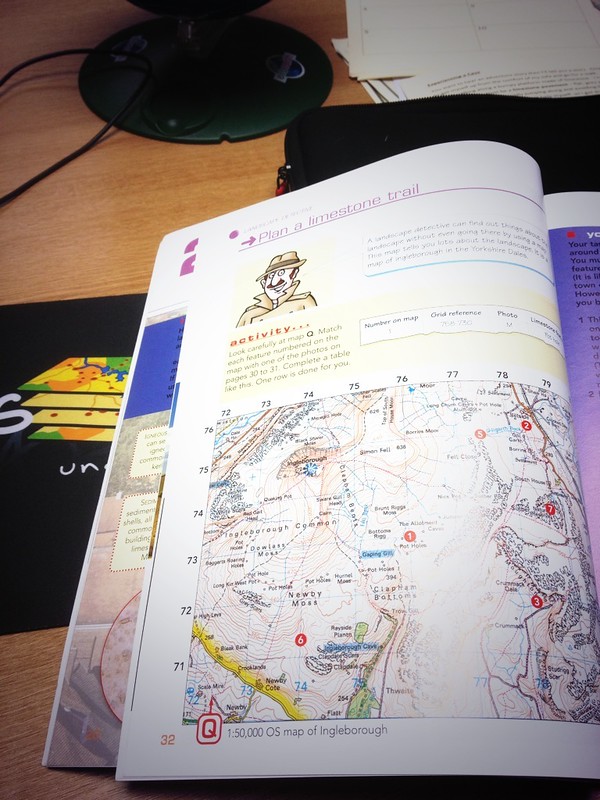
Download the guide to the cave HERE (PDF download)
Be aware of the main elements of a cave system, and how they develop over time.
How does the cave form ?
What is calcite ?
What are the world's deepest, largest or longest cave systems ?
Check out the crystal cave visited by Iain Stewart in this BBC clip.
I shared stories of how my grandfather was a coal miner and sometimes worked almost naked because of the heat underground...
We used John Widdowson's 'This is Geography' book to supplement this with an exploration of the Yorkshire Dales, using Val Vannet's Flickr SAGT set of photos.
Also remember the Craven Pothole Club's bosun's chair descent on August bank holiday....
Antarctica Day - 1st December
The 1st of December is Antarctica Day

The date was chosen to commemorate the signing of the Antarctic Treaty, which has kept the continent in a state of 'limbo' for decades.
Has it been a success or a failure ?
We started to discuss this on Friday.
Merits to the first King's Ely students to see me on Monday and wish me a 'Happy Antarctica Day'...

The date was chosen to commemorate the signing of the Antarctic Treaty, which has kept the continent in a state of 'limbo' for decades.
Has it been a success or a failure ?
We started to discuss this on Friday.
Merits to the first King's Ely students to see me on Monday and wish me a 'Happy Antarctica Day'...
Saturday, 30 November 2013
Geography department wins awards...
From the School Newsletter
King’s Ely becomes Centre of Excellence in Geography
KING’S Ely has been awarded the coveted Centre of Excellence award by the Geographical Association, which is the highest accolade a school can receive in the subject.
This prestigious award recognises a department’s contribution to quality geography, both within and beyond the school, and has only been awarded to 40 schools in the country.
Over the past few years, the Geography department at King’s Ely has integrated iPads into the curriculum, built a departmental website and taken students to Iceland and China, as well as establishing the Geography Ambassador group to support those students interested in a geography related career. The school has also played a leading role in supporting geography teachers in local and regional cluster groups through continuous professional development (CPD) training.”
All of the award winners undergo a rigorous moderation process. The assessors were hugely impressed by the manner in which geography is “made relevant to students at King’s Ely”. They went on to say: “Students have a huge range of opportunities to develop their interest and love of the subject and the department has an extremely high impact beyond the school itself.”
Head of Geography, Claire Kyndt, commented: “We are very excited to receive this award, which reflects the enthusiastic, excellent and innovative teaching in the Geography department.”
The school will collect the award at the Geographical Association’s annual awards evening, which takes place at the University of Surrey in April next year.
Principal of King’s Ely, Sue Freestone, commended the staff and students for their various contributions, adding: “Given advances in technology and our growing understanding of our world, 21st century Geography is one of the most exciting subjects any pupil can study. It is very gratifying to have the excellence of the work our geographers are doing recognised by the Geographical Association.”
plus
This prestigious award recognises a department’s contribution to quality geography, both within and beyond the school, and has only been awarded to 40 schools in the country.
Over the past few years, the Geography department at King’s Ely has integrated iPads into the curriculum, built a departmental website and taken students to Iceland and China, as well as establishing the Geography Ambassador group to support those students interested in a geography related career. The school has also played a leading role in supporting geography teachers in local and regional cluster groups through continuous professional development (CPD) training.”
All of the award winners undergo a rigorous moderation process. The assessors were hugely impressed by the manner in which geography is “made relevant to students at King’s Ely”. They went on to say: “Students have a huge range of opportunities to develop their interest and love of the subject and the department has an extremely high impact beyond the school itself.”
Head of Geography, Claire Kyndt, commented: “We are very excited to receive this award, which reflects the enthusiastic, excellent and innovative teaching in the Geography department.”
The school will collect the award at the Geographical Association’s annual awards evening, which takes place at the University of Surrey in April next year.
Principal of King’s Ely, Sue Freestone, commended the staff and students for their various contributions, adding: “Given advances in technology and our growing understanding of our world, 21st century Geography is one of the most exciting subjects any pupil can study. It is very gratifying to have the excellence of the work our geographers are doing recognised by the Geographical Association.”
plus
More awards in the Geography department as teacher receives outstanding contribution award
Alan Parkinson travelled to Scotland to be awarded the 2013 Tivy Education Medal, along with an honorary Fellowship of the Royal Scottish Geographical Society (RSGS).
The medal, which is rarely awarded, was presented to Alan by Professor Iain Stewart, who has produced several television programmes on geology and earth science.
At the same RSGS conference, the book Fieldwork through Enquiry, which Alan co-wrote with John Widdowson, won the Scottish Association of Geography Teachers (SAGT) Book Award. Another of Alan’s publications was also commended, and he has previously received the Royal Geographical Society’s Ordnance Survey award for excellent teaching.
While delighted to have received the medal, Alan humbly remarked: “What was equally important to me was to read and hear the comments of others who were there, who appreciated the work that I’ve created and shared over the years.”
The Geography department at King’s Ely made headlines earlier in the term when it received the Geographical Association’s prestigious Centre of Excellence award, which is the highest accolade a school can receive in the subject.
The medal, which is rarely awarded, was presented to Alan by Professor Iain Stewart, who has produced several television programmes on geology and earth science.
At the same RSGS conference, the book Fieldwork through Enquiry, which Alan co-wrote with John Widdowson, won the Scottish Association of Geography Teachers (SAGT) Book Award. Another of Alan’s publications was also commended, and he has previously received the Royal Geographical Society’s Ordnance Survey award for excellent teaching.
While delighted to have received the medal, Alan humbly remarked: “What was equally important to me was to read and hear the comments of others who were there, who appreciated the work that I’ve created and shared over the years.”
The Geography department at King’s Ely made headlines earlier in the term when it received the Geographical Association’s prestigious Centre of Excellence award, which is the highest accolade a school can receive in the subject.
Friday, 29 November 2013
Thursday, 28 November 2013
Channel 5 programme on the Arctic
Catch up from 9pm tonight, a journey with Chris Terrill as he explores 'Surviving the Arctic'.
Remember it's after the watershed...
He follows the Saami of Northern Norway as they follow their reindeer on their migration...
Remember it's after the watershed...
He follows the Saami of Northern Norway as they follow their reindeer on their migration...
Wednesday, 27 November 2013
Can you 'bear' to watch this Year 8 ?
An interesting video on the Guardian site for Year 8s.
Connects with work on Polar Bears and the Inuit, and the communities in the Arctic.
It takes you to a place called Churchill.
Churchill in northern Manitoba bills itself as the the polar bear capital of the world and its tourism-based economy depends on it. But as climate change forces the polar bears inland in search of food, attacks on humans are increasing. Can this small community continue to co-exist with the world's largest land predator?
Suzanne Goldenberg reports from Churchill where its bear alert programme uses guns, helicopters and a polar bear jail to manage the the creatures
Polar Bears International has more on these creatures, which have become an emblem of global warming due to their reliance on sea ice to patrol their huge territories.
Connects with work on Polar Bears and the Inuit, and the communities in the Arctic.
It takes you to a place called Churchill.
Churchill in northern Manitoba bills itself as the the polar bear capital of the world and its tourism-based economy depends on it. But as climate change forces the polar bears inland in search of food, attacks on humans are increasing. Can this small community continue to co-exist with the world's largest land predator?
Suzanne Goldenberg reports from Churchill where its bear alert programme uses guns, helicopters and a polar bear jail to manage the the creatures
Polar Bears International has more on these creatures, which have become an emblem of global warming due to their reliance on sea ice to patrol their huge territories.
Sunday, 24 November 2013
There's an app for that...
Year 8s have been exploring the impact of changes in the Arctic on the indigenous peoples. It's worth remembering that there are no indigenous people in the Antarctic, only visitors from many nations.
There are various groups of peoples who live in the Arctic.
A general term is Inuit, but there are many groups stretching into the Russian Arctic which are not related to that group.
The Arctic Centre suggests that around 4 million people are now living in the area, and these are spread around the ocean in an uneven distribution.
The U Arctic Atlas website has some useful maps. These are worth further investigation, as are the links with the maps.
There are limited options for the use of mobile phones in these areas. Not much change of picking up WiFi. We identified, using the Discovering the Arctic website that there is mobile phone coverage within a short distance of Qaanaaq.
What Arctic apps could we design that would help local peoples cope with some of the challenges of living in such an environment. This requires a little bit of creative thought and imagination.
What are some of the challenges ?
- climate change and altering landscapes
- navigation
- hunting and fishing
- communications...
- loneliness
- languages
- the extremes of the weather....
Year 8s were very creative and had some great ideas. I shall be sharing some of them as we develop the ideas further and bring them to a conclusion. Here's a sheet that I am going to use to do some reflection and peer assessment of the finished apps, which will also make a good display when they're finished.
Google 'Blank iPad' for some appropriate images that could be used as a format for the finished work.
Credit to Tony Cassidy for the original idea....
There are various groups of peoples who live in the Arctic.
A general term is Inuit, but there are many groups stretching into the Russian Arctic which are not related to that group.
The Arctic Centre suggests that around 4 million people are now living in the area, and these are spread around the ocean in an uneven distribution.
The U Arctic Atlas website has some useful maps. These are worth further investigation, as are the links with the maps.
There are limited options for the use of mobile phones in these areas. Not much change of picking up WiFi. We identified, using the Discovering the Arctic website that there is mobile phone coverage within a short distance of Qaanaaq.
What Arctic apps could we design that would help local peoples cope with some of the challenges of living in such an environment. This requires a little bit of creative thought and imagination.
What are some of the challenges ?
- climate change and altering landscapes
- navigation
- hunting and fishing
- communications...
- loneliness
- languages
- the extremes of the weather....
Year 8s were very creative and had some great ideas. I shall be sharing some of them as we develop the ideas further and bring them to a conclusion. Here's a sheet that I am going to use to do some reflection and peer assessment of the finished apps, which will also make a good display when they're finished.
Google 'Blank iPad' for some appropriate images that could be used as a format for the finished work.
Credit to Tony Cassidy for the original idea....
KS3 structure.... the latest thinking...
For those who might be interested in what I'm going to be teaching, this is the current KS3 that we are planning to teach.
It's also here in advance of some courses I'm running for OSIRIS later this month on the future of Secondary Geography.
These have a slight focus on curriculum development... as this will frame what many people plan to teach, and therefore impact on how it is taught... and what preparations may be needed in terms of resources.
Here's the topics for the Michealmas Term in Geography department.
Year 7
Adventure Landscapes, including planned assessment on Mount Everest although Matt Podbury seems to have that sewed up with his new website section on Geography Pods.
Year 8
Pole to Pole - focus on Antarctic and Arctic futures....
Year 9
Cities, including assessment on Designing a Future city at the end of the unit.
The current structure is likely to undergo some adaptation over the next few months, and in the light of student feedback as we move through the year. The current topics are identified in yellow text down the right hand side of the blog as well, so that you can see what I am currently teaching. Details of the Lent Term topics will appear after Christmas.
King's Ely students should use the Geography Department area on Firefly to access the relevant support materials for the topics that we are teaching.
You can also search the blog using the search box top left, or use the LABELS on the posts to identify a topic that you are interested in - you should see Year 7, 8 and 9 standing out in the right hand side-bar in the labels word cloud. Clicking the relevant word will also load the posts.
It's also here in advance of some courses I'm running for OSIRIS later this month on the future of Secondary Geography.
These have a slight focus on curriculum development... as this will frame what many people plan to teach, and therefore impact on how it is taught... and what preparations may be needed in terms of resources.
Here's the topics for the Michealmas Term in Geography department.
Year 7
Adventure Landscapes, including planned assessment on Mount Everest although Matt Podbury seems to have that sewed up with his new website section on Geography Pods.
Year 8
Pole to Pole - focus on Antarctic and Arctic futures....
Year 9
Cities, including assessment on Designing a Future city at the end of the unit.
The current structure is likely to undergo some adaptation over the next few months, and in the light of student feedback as we move through the year. The current topics are identified in yellow text down the right hand side of the blog as well, so that you can see what I am currently teaching. Details of the Lent Term topics will appear after Christmas.
King's Ely students should use the Geography Department area on Firefly to access the relevant support materials for the topics that we are teaching.
You can also search the blog using the search box top left, or use the LABELS on the posts to identify a topic that you are interested in - you should see Year 7, 8 and 9 standing out in the right hand side-bar in the labels word cloud. Clicking the relevant word will also load the posts.
Professor David Lambert on Geography and curriculum...
"Without geography, the world would be a mystery to us. Geography is the subject that contributes more than any other to young people’s knowledge of the world."
Professor David Lambert
Preparing for 2 courses I'm leading over the next few weeks on the future geography curriculum and pedagogy.
Watching a video of my old boss Professor David Lambert at SSAT
Here's a shorter video from the Institute of Education which is worth a few minutes of your time too.
More here from a recent post by Malcolm McInerny
More here from a recent post by Malcolm McInerny
Saturday, 23 November 2013
Curriculum 2014: WHAT will you be teaching about for the first time...
Feel free to tell me what you are going to be teaching for the first time in 2014...
Double click the PADLET wall...
Double click the PADLET wall...
Sea Level Rise
We talked about the impact of sea level rise on some parts of the world.
The rate of sea level rise is speeding up, as the diagram here shows..
The rate of sea level rise is speeding up, as the diagram here shows..
#SeaLevelRise update: New monthly measure at 48.45 mm. More #climatechange key indicator info: http://t.co/tv1TIaJQh0 pic.twitter.com/CkoSGKMqWT
— NASA Climate (@EarthVitalSigns) November 21, 2013
Curriculum 2014: WHERE will you be teaching about ?
Was reminded of my proposed use of PADLET (or Wallwisher as it used to be) with my forthcoming OSIRIS course earlier today by a tweet from Russel Tarr who was at an event in Amsterdam with Richard Allaway. Richard was using it for crowd-sourcing.
Once the board is created, others who know about the board can add to it....
The first board is asking WHERE people will teach about in a future curriculum...
Please feel free to add some places that you are going to be teaching about for the first time in 2014, or places which you are going to develop further....
Once the board is created, others who know about the board can add to it....
The first board is asking WHERE people will teach about in a future curriculum...
Please feel free to add some places that you are going to be teaching about for the first time in 2014, or places which you are going to develop further....
Urban Earth, or Urban UK...
18.5% of the population of England and Wales live in rural areas. http://t.co/9sQSmW0k3D #2011census
— ONS (@ONS) November 22, 2013
How has the changing nature of the UK been influenced by counter-urbanisation and urbanisation...Friday, 22 November 2013
Brighton Rocks
An image from my trip there on Wednesday.
Year 9s.... how has Brighton changed over the years ?
Which of the original site and situation factors in its original founding are still relevant today ?
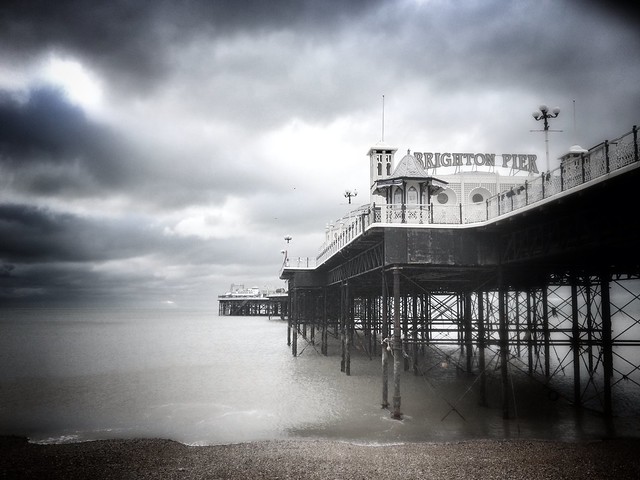
Image: Alan Parkinson
Year 9s.... how has Brighton changed over the years ?
Which of the original site and situation factors in its original founding are still relevant today ?
Image: Alan Parkinson
Britten at 100...
Today, KEJ will be having an extended assembly to celebrate the centenary of Benjamin Britten.
He is one of the most celebrated of English composers and is associated with East Anglia, in particularly the Suffolk coastal town of Aldeburgh.

This is the scallop on the beach near Aldeburgh, created by Maggi Hambling. There's a geography element to this: the sculpture is very site specific, but not everyone likes it, and it has been vandalised several times. It does, however attract visitors, who are likely to spend money to support local shops and services. The words are taken from one of Britten's works which, like a lot of his output, was connected with the sea...
Image: Alan Parkinson
He is one of the most celebrated of English composers and is associated with East Anglia, in particularly the Suffolk coastal town of Aldeburgh.
This is the scallop on the beach near Aldeburgh, created by Maggi Hambling. There's a geography element to this: the sculpture is very site specific, but not everyone likes it, and it has been vandalised several times. It does, however attract visitors, who are likely to spend money to support local shops and services. The words are taken from one of Britten's works which, like a lot of his output, was connected with the sea...
Image: Alan Parkinson
City revision
A mind map framework to get you started...
Add in the connections and examples.
Remember to colour code different 'branches'...
Add in the connections and examples.
Remember to colour code different 'branches'...
Going underground
Hand out the diagram and read through the description below, perhaps with some images. Add the labels in the appropriate place.
Thanks to Miss Kyndt for the resources here.
If you need some top quality images, you should head over to Val Vannet's images on the SAGT Flickr set, as seen below:
And finally, you can use John Widdowson's 'This is Geography 2' book and resources to explore further. Grikey....
Tuesday, 19 November 2013
Encyclopaedia Antarctica 4
A nice little element of a poster on various whales from JJ, Ethan and Michael
Cut the Rope...
 We spent some time in the last few days finishing off the book 'Touching the Void' in Year 7
We used a special version of the book, produced by Scholastic.
There will be some questions on the exam, next week, on the book, and how the environment that the action took place in affected the story.
There was certainly a successful piece of work, with some great student ideas and maps....
Thanks for all the interesting questions and responses that you had to the film too. Some of you said that you were going to be watching the film in advance of the exams next week - watch out for the bad language...
There were plenty of discussions on Simon Yates' decision to cut the rope...
You might be able to find some clips online - I did....
Be aware that there might be some bad language in it...
If you want more, here's some free resources that you can download which is based on the book.
I also got the proofs for my latest childrens' book a few days ago, and the draft front cover of the book, which is about Extreme Survival, features a still image from the film...
Year 9 Revision
A reminder for Year 9s that there are notes relating to the work that we have done on the departmental Firefly area, and they have also been sent in various forms to you.
Read back through your book, but remember that there are likely to be elements of the work that, for whatever reason, are not there, so be familiar with the extension in these documents.
Read the relevant sections of the blog and catch up with some of the YouTube videos that we used, for example, in the counter-urbanisation lesson, there were several clips:
Aled Jones in Cambridgeshire...
How is the county represented...
Also a useful revision video...
A theme running through the term has been the move towards a sustainable city.
Be clear of what this might mean for future cities.
Are cities our future, or are they unsustainable ?
Remember Dubai, Singapore and other cities we have 'explored'...
Read back through your book, but remember that there are likely to be elements of the work that, for whatever reason, are not there, so be familiar with the extension in these documents.
Read the relevant sections of the blog and catch up with some of the YouTube videos that we used, for example, in the counter-urbanisation lesson, there were several clips:
Aled Jones in Cambridgeshire...
How is the county represented...
Also a useful revision video...
A theme running through the term has been the move towards a sustainable city.
Be clear of what this might mean for future cities.
Are cities our future, or are they unsustainable ?
Remember Dubai, Singapore and other cities we have 'explored'...
Huge glacier collapse in West Greenland
On May 28, 2008, Adam LeWinter and Director Jeff Orlowski filmed a historic breakup at the Ilulissat Glacier in Western Greenland. The calving event lasted for 75 minutes and the glacier retreated a full mile across a calving face three miles wide. The height of the ice is about 3,000 feet, 300-400 feet above water and the rest below water.
How are Inuit's lives changing ?
Remember that the Inuit are representative of the various people who live in the circum-polar region of the Arctic.
Their lives are changing.
This document helps students assess and record some of these changes...
How Are Inuit's live changing ?
Their lives are changing.
This document helps students assess and record some of these changes...
How Are Inuit's live changing ?
Saturday, 16 November 2013
Two Antarctic stories that are in the news...
Year 8s should follow up these two stories a little.

First relates to the Pine Island Glacier. This is currently breaking up, and threatens to put large icebergs out into the Southern Ocean which may then drift into the shipping lanes. It follows the earlier event at 'Larsen B', which we explored a little.
You can also follow the glacier on Twitter.
The second relates to Mount Erebus. This has been dormant for many years, but is now showing signs of coming back to life. This would potentially have a major impact on some of the science taking place in the area.
Another reminder that geography is always happening...
First relates to the Pine Island Glacier. This is currently breaking up, and threatens to put large icebergs out into the Southern Ocean which may then drift into the shipping lanes. It follows the earlier event at 'Larsen B', which we explored a little.
You can also follow the glacier on Twitter.
The second relates to Mount Erebus. This has been dormant for many years, but is now showing signs of coming back to life. This would potentially have a major impact on some of the science taking place in the area.
Another reminder that geography is always happening...
Friday, 15 November 2013
Lots of spots in school today for Children in Need...

Plenty of social media coverage.
I'm going to see how many times I can fit the words 'children in need' into my teaching today... e.g. lesson on the issues with rural to urban migration should provide some opportunities...
The PeePoo
One problem with favelas and similar settlements in other countries is the lack of sanitation.
This could be one solution to that problem. It has been around for a few years now, and was first proposed around the time of World Water Day. We saw Kevin McCloud in 'Slumming it' (have you watched the rest of the video yet ?) and he followed the sewage pipes into the slum.
One square mile housing a million people will produce a rather large amount of human waste...
In the slums of Kibera, as described by Bill Bryson in his 'Africa Diary', there are 'flying toilets', which are a major problem...
Here's the PeePoo in action:

Can you identify other simple, cost-effective solutions to some of the problems that face people living in Favelas ?
Remember that there will be questions relating to the impact of urbanisation on the exam.
Urbanisation is an increase in the proportion of people living in cities (it is not necessarily an increase in the number of people, as there may be a related increase in the population of rural areas too...)
This could be one solution to that problem. It has been around for a few years now, and was first proposed around the time of World Water Day. We saw Kevin McCloud in 'Slumming it' (have you watched the rest of the video yet ?) and he followed the sewage pipes into the slum.
One square mile housing a million people will produce a rather large amount of human waste...
In the slums of Kibera, as described by Bill Bryson in his 'Africa Diary', there are 'flying toilets', which are a major problem...
Here's the PeePoo in action:

Can you identify other simple, cost-effective solutions to some of the problems that face people living in Favelas ?
Remember that there will be questions relating to the impact of urbanisation on the exam.
Urbanisation is an increase in the proportion of people living in cities (it is not necessarily an increase in the number of people, as there may be a related increase in the population of rural areas too...)
Tuesday, 12 November 2013
Encyclopaedia Antarctica 3
Here's another Prezi, this time from Elliot and Angus on the theme of Huskies...
Monday, 11 November 2013
Encyclopaedia Antarctica 2
One of my jobs for the half term break was to assess and assemble the various contributions in a myriad of formats that were produced for the Encyclopaedia Antarctica project. I didn't quite get that finished for various reasons, but will be doing that over the next few lessons.
There are many excellent pieces of work, and I'll feature some of them here, as well as add some of them to the Geography department Firefly page (for internal school access only...)
Here are some initial ones to get us started...
A prezi from Emily and Heloise on Icebergs
There are many excellent pieces of work, and I'll feature some of them here, as well as add some of them to the Geography department Firefly page (for internal school access only...)
Here are some initial ones to get us started...
A prezi from Emily and Heloise on Icebergs
Sunday, 10 November 2013
Mystery litter problem
There are plenty of options for exploring the management of National Parks and similar areas...
There are plenty of National Parks in different areas of the UK, and different contexts to their management. There are also National Parks in various other countries. At Explorer HQ, we recently worked with the John Muir Trust, named after someone who is synonymous with the outdoors and the appreciation of the beauty of nature. I created this book here for the John Muir Trust.
Watch out for the GREAT OUTDOORS DAY, coming to KEJ in the Lent term.
How does this image connect with Death Valley National Park in the UK ?

There are plenty of National Parks in different areas of the UK, and different contexts to their management. There are also National Parks in various other countries. At Explorer HQ, we recently worked with the John Muir Trust, named after someone who is synonymous with the outdoors and the appreciation of the beauty of nature. I created this book here for the John Muir Trust.
Watch out for the GREAT OUTDOORS DAY, coming to KEJ in the Lent term.
How does this image connect with Death Valley National Park in the UK ?
Death Valley is a National Park in the SW of the United States.
Check out the park's Facebook page for the latest news and updates.
This NBC News report has more detail...
A cracking story...
Can you work it out ?
Check out the park's Facebook page for the latest news and updates.
This NBC News report has more detail...
A cracking story...
Can you work it out ?
They shall grow not old...
They went with songs to the battle, they were young,
Straight of limb, true of eye, steady and aglow.
They were staunch to the end against odds uncounted;
They fell with their faces to the foe.
They shall grow not old, as we that are left grow old:
Age shall not weary them, nor the years condemn.
At the going down of the sun and in the morning
We will remember them.
They mingle not with their laughing comrades again;
They sit no more at familiar tables of home;
They have no lot in our labour of the day-time;
They sleep beyond England's foam.
Laurence Binyon

This is the school's honours board, which is mounted on the wall next to the path leading to the Hayward Theatre.
Tomorrow, the whole school will assemble in Ely Cathedral for a Remembrance service. It will be a moving event, 95 years on from the Armistice of 1918, and with the centenary of the start of the war coming next year in 2014
I noticed in my paper this weekend a whole host of companies offering tours to the battlefields, and the coming few years promise to be a big one for "trench - tourism".
I spoke to my parents today when they came over for Sunday lunch, and was reminded of my Great Grandfather who died in 1915, was awarded the Military Cross and whose name is inscribed on the Menin Gate, and of my Grandfather who served alongside the Desert Rats in Egypt and North Africa and then came back through Italy.... and my great Uncle who died in WWII while serving in the Tank regiment...
A reminder that we are still 'connected' with these stories... LivingHistory to go alongside our LivingGeography...
And meanwhile Armed Forces are serving in current conflicts...
You can search for your own family members on the Commonwealth War Graves Commission site.
Wear your poppy with pride tomorrow...
Image: Alan Parkinson
Straight of limb, true of eye, steady and aglow.
They were staunch to the end against odds uncounted;
They fell with their faces to the foe.
They shall grow not old, as we that are left grow old:
Age shall not weary them, nor the years condemn.
At the going down of the sun and in the morning
We will remember them.
They mingle not with their laughing comrades again;
They sit no more at familiar tables of home;
They have no lot in our labour of the day-time;
They sleep beyond England's foam.
Laurence Binyon
This is the school's honours board, which is mounted on the wall next to the path leading to the Hayward Theatre.
Tomorrow, the whole school will assemble in Ely Cathedral for a Remembrance service. It will be a moving event, 95 years on from the Armistice of 1918, and with the centenary of the start of the war coming next year in 2014
I noticed in my paper this weekend a whole host of companies offering tours to the battlefields, and the coming few years promise to be a big one for "trench - tourism".
I spoke to my parents today when they came over for Sunday lunch, and was reminded of my Great Grandfather who died in 1915, was awarded the Military Cross and whose name is inscribed on the Menin Gate, and of my Grandfather who served alongside the Desert Rats in Egypt and North Africa and then came back through Italy.... and my great Uncle who died in WWII while serving in the Tank regiment...
A reminder that we are still 'connected' with these stories... LivingHistory to go alongside our LivingGeography...
And meanwhile Armed Forces are serving in current conflicts...
You can search for your own family members on the Commonwealth War Graves Commission site.
Wear your poppy with pride tomorrow...
Image: Alan Parkinson
You need Hans
The most engaging statistician you'll ever come across is Hans Rosling.
He founded the Gapminder Foundation.
http://www.gapminder.org/ is a tool I've used for many years....
Earlier this week, he presented a programme which you can still catch on the BBC iPlayer for a few more days.

Check out all the data that Hans used HERE - it's essential for anyone studying population or related topics... which means all geographers...
Here he is on Newsnight....
Of course, we'll soon be outnumbered by Lego figures....
He founded the Gapminder Foundation.
http://www.gapminder.org/ is a tool I've used for many years....
Earlier this week, he presented a programme which you can still catch on the BBC iPlayer for a few more days.
Check out all the data that Hans used HERE - it's essential for anyone studying population or related topics... which means all geographers...
Here he is on Newsnight....
Of course, we'll soon be outnumbered by Lego figures....
Friday, 8 November 2013
Favela Fact file...
Using recent BBC News coverage, explore the changing landscape of Rio de Janeiro in the run up to the World Cup 2014
How is the city changing ?
How is the city changing ?
Thursday, 7 November 2013
Go 'Geographical'...
The Geography department at King's is a subscriber to the 'Geographical' journal of the Royal Geographical Society, and also has access to the online versions.
All students at King's can now access these journals in several ways:

a) login online and download individual editions as printable PDFs or read them on screen
b) download the GEOGRAPHICAL app from the App store, and access the journals on iPhone or iPad
Contact a member of geography staff for the passwords and details and get reading...
All students at King's can now access these journals in several ways:
a) login online and download individual editions as printable PDFs or read them on screen
b) download the GEOGRAPHICAL app from the App store, and access the journals on iPhone or iPad
Contact a member of geography staff for the passwords and details and get reading...
Wednesday, 6 November 2013
Rising Sea Levels
We've been exploring the potential impact of sea level rise on the planet as a result of climate change.
This National Geographic interactive shows what might happen if all the ice melts....

This National Geographic interactive shows what might happen if all the ice melts....
Subscribe to:
Posts (Atom)