Showing posts with label Windrush Child. Show all posts

Sunday, 2 March 2025

Windrush Monument

I passed through Waterloo a few weeks ago to head for the GTE Conference.

Waterloo is home to the National Windrush Monument. 

This was unveiled in June 2022 by Prince William so is a relatively new addition to the station.


We read 'Windrush Child' by Benjamin Zephaniah with Year 7 students and have done for the last 4 years.

Monday, 16 September 2024

Windrush - a BBC resource

Thanks to Mrs. Mankellow for the tip off to this BBC Bitesize resource which explores the story of Benjamin Zephaniah's 'Windrush Child' which we read with Year 7.

The 'plot' section is excellent, although it does contain quite a few spoilers so we may use this once we have finished reading the book.

Image copyright: BBC


Wednesday, 6 March 2024

Musicians on the Windrush

 Via the National Archives site.

26-year-old Aldwyn Roberts from Trinidad was onboard and listed his occupation as ‘Artist’. He was a calypso singer and is better known by his stage name, ‘Lord Kitchener’. During the journey, he wrote the song ‘London is the Place for Me’, which he performed on the ship’s arrival to Tilbury.

Mona Baptiste was similarly from Trinidad and was 21 when she travelled on the ship. Although her occupation was listed as ‘Clerk’ in the passenger list, she was a blues singer and went on to have a successful career in the music and broadcasting industries.


Sunday, 14 January 2024

Free Windrush Resources

Visit the Windrush Foundation website for a whole range of free resources for educational use. These are going to be rolled out over the next year.

A free event will take place to launch these.

SUNDAY 21 JANUARY 2024, 7pm to 9pm

This free online event launches a year-long rollout that will offer opportunities to schools in Britain, and elsewhere, first-hand knowledge of the late Sam King’s seminal work. The suite of seven resources will show Windrush as just one, among many other chapters, of British post-WWII history. The resources include more than 500 pages of materials, and feature stories also of the lived experiences of Windrush passengers. Further research and publications will follow.


Members of the Windrush Generation are those who arrived on June 22, 1948, at Tilbury Docks, on the Empire Windrush, but excludes passengers who arrived after June 1948 on other ships or by BOAC (BA). 

The Empire Windrush made only one return journey to the West Indies in 1948.

Windrush Foundation’s seminal education resources will help educators to teach the facts about Windrush and will explain its true meaning. Numerous distortions of the late Sam King’s idea have been publicised over the years and it is hoped that this suite of resources will debunk those falsehoods and conflations.


Get your Eventbrite tickets from this link. I have downloaded the free eBooks.

Thanks to Arthur Torrington for the information.

Saturday, 16 December 2023

Migration Nation

This is part of a KS3 History series published by Oxford and written by Aaron Wilkes.

I bought it for the section on the 'Windrush'.

This chapter is excellent. I also have another book in the series. They are well written and nicely designed.

As always, the historical perspective and some of the ideas and resources are well worth blending with the geographical enquiry and topics which are the reason why we use the late Benjamin Zephaniah's book as a focus with Year 7 students. 

As blogged a few days ago, there was quite a lot of sadness when students heard of the passing of Benjamin.


Thursday, 7 December 2023

Benjamin Zephaniah - rest in power

This was really sad news to come across this morning, just after I'd been teaching using one of Benjamin's books with my Year 7 group. Taken so young...

I have used Benjamin's work over the years. 

His energy and distinctive delivery were powerful and memorable. There are also many clips about his refusal to accept an OBE, with its links to Empire, and other elements of his work, from dub poetry to music to educational work to activism, as well as his academic work.

His poem 'Talking Turkeys' is part of the work we do on food, around Christmas time in particular.

We also use his poem 'The British' as part of our work on citizenship and identity.

Benjamin also narrated Daniel Raven Ellison's film 'The UK in 100 Seconds'.

Finally, we have been using his book 'Windrush Child' for three years with our Year 7 groups. We have an Audible version of it now to aid the teaching. The resources have been shared previously, over on my Geography teaching blog.

Twitter has been full of memories of Benjamin ever since the news came out:

Another excellent contribution was Benjamin's talk at Hay Festival Digital in 2021, where he talked about his book 'Windrush Child'.This was full of insight and interest. Some posts on my teaching jobs are here.

A podcast worth listening to here. 

And a programme on his home city of Birmingham.

Condolences to friends and family...

Monday, 23 October 2023

Mapping Windrush

A new resource from the National Archives.

This is perfect for our unit on 'Windrush Child'.


The iconic Empire Windrush passenger list acts as a gateway into the personal migration stories of those on board. It is an invaluable record as it provides a wealth of information about the passengers, such as their names, ages, occupations, onward addresses, and their last country of residence. Although not the first ship to carry migrants from the Caribbean, the Empire Windrush is symbolic of the wider story of post-war migration to Britain.

The ship visited numerous ports on its route to Tilbury docks in 1948. The first port that passengers embarked at was Port of Spain (Trinidad), followed by Kingston (Jamaica), Tampico (Mexico), Havana (Cuba), and Bermuda, before crossing the Atlantic to reach Tilbury Docks. Passengers disembarked at Tilbury on 22 June 1948. There were 1,027 passengers onboard the ship, all with their own personal story.

There was a diverse range of people onboard the Empire Windrush. Although the passengers were mostly male, there were also women and children onboard. They ranged in age from just six weeks old to 80, and travelled in different capacities. Some passengers travelled with their families, some alone.

Passengers also travelled to Britain for a variety of reasons. Some migrated to Britain to seek new opportunities and economic stability, others were joining family and friends. The extraction of resources from the Caribbean by the British contributed to the poor economic situation in the Caribbean, which influenced post-war migration to Britain too.

Over 800 people gave their last country of residence as somewhere in the Caribbean. A common misconception is that all passengers were migrating from Jamaica. However, people migrated from numerous islands in the Caribbean including Trinidad, St Lucia, Grenada and Barbados, as well as Jamaica.

The British government initially encouraged migration from its colonies and Commonwealth countries to boost the workforce after the Second World War. In 1948 it passed the British Nationality Act, which created the status of ‘Citizens of the United Kingdom and Colonies’. This new legislation around citizenship aided post-war migration to Britain, as it gave people from British colonies the right to live and work in Britain.


Thursday, 22 June 2023

Windrush Day 2023

We will be revisiting the work we did earlier in the academic year today with those groups who have a Year 7 lesson.

Windrush Day marks the day that the original migrants disembarked from the ship and changed the history of Britain.

Local newspapers have been sharing many stories of migrants for some days, and local news has also had some good coverage, which is pleasing to see.
I have a growing library of books on this and related topics, including the book by Floella Benjamin.

There have also been some recent interesting new additions:

- The Royal Mint has launched some new coins, desgined by Valda Johnson. 


There are 8 stamps featuring related scenes and I have ordered a set, along with postcards.

Further stories of the callous government decisions affecting the Windrush Generation are emerging.

Wednesday, 8 March 2023

Sunday, 5 March 2023

Leonard Parkinson of the Maroons


The last half term has seen the second running through with Year 7 of our reading of 'Windrush Child' by Benjamin Zephaniah.

The British Library has a piece which explores a little more about the history of the area around Maroon Town.

Slavery made a huge impact on much of the world, and continues to do so through the legacy of colonialism and the campaign for proper reparations. Many landowners in the UK 

Maroon Town is an important place in the book. It is where the main character in the book was born and where the spirit of 'Nanny of the Maroons' who is featured on a Jamaican banknote. I came across this image of Leonard Parkinson, who was one of the Maroon freedom fighters. 

The main character in the book is called Leonard (we don't find out his surname), but it would be interesting to know whether he was named after this person.

Source: http://www.slaveryimages.org/s/slaveryimages/item/1227

If you haven't seen this UCL map before, this is also an important resource for exploring local connections with the slave trade.

It's produced by the Centre for the Study of Legacies of British Slavery.


Wednesday, 11 January 2023

Ben Zephaniah video for Year 7

An interview with Ben Zephaniah where he talks about a key point in the book we are reading with Year 7.

Sunday, 17 July 2022

Windrush Foundation Story Competition

Windrush Essay Writing Competition

Sam King Windrush Awards shall be given to two girls and two boys up to the age of 14 who can produce an outstanding fictional narrative about the West Indians who travelled on the MV Empire Windrush and arrived at Tilbury Docks on 22 June 1948. 
Sponsored by Windrush Foundation, the participant would be expected to submit an essay with no more than 300 hand-written words on A4 paper. 
Our objective is to promote literacy, expression, creativity, originality, and to celebrate imagination.

The Sam King Windrush Award is sponsored by Windrush Foundation

Terms and Conditions: 
The entry must be an imaginary short story.
It must be an original piece of work written independently by a child up to the age of 14.
Stories cannot be written by more than one person. One entry per child allowed.
The child must not include their personal details within their story.
Entries must not include unsuitable material.
It must be no more than 300 words.
Make sure to use your own words.
Do not submit an entry without proofreading.
Presentation is important, consider the visual appearance of the entry as well as the quality of the content. The story must be submitted by the child’s parent or guardian using the email address below.
The work must include a good standard of spelling, grammar and punctuation, neat presentation, and clear handwriting.
Topics could include: (1) MV Empire Windrush; (2) Before departing the West Indies; (3) The Journey to Britain; (4) Arriving at Arrival at Tilbury Docks; (5) Life in Britain
You should scan the handwritten story and email it to: info@windrushfoundation.com
The competition is open from TODAY and closes on 23 SEPTEMBER 2022
Winners will be announced during October 2022.


FOR MORE INFORMATION: info@windrushfoundation.com

www.windrushfoundation.com


Friday, 24 June 2022

Windrush Day 2022

June 22nd is Windrush Day. 

We didn't have any lessons because of the move-up morning.

We have offered a new unit this year on the Ben Zephaniah book 'Windrush Child' and will be teaching it again next year with a few tweaks by Mrs. Melville.

Windrush Day was earlier this week.
A statue was unveiled outside Hackney Town Hall. It is called Warm Shores.

It has been visited by the GA Vice President Alastair Owens:

Tuesday, 1 March 2022

Windrush Child

'Windrush Child' is a book by Benjamin Zephaniah which follows the story of Leonard. His father was one of the passengers of 'Empire Windrush' and when he is 10, Leonard joins his father along with his mother, travelling on the 'Arosa Star' to start a 'better life' in the UK.

The book follows Leonard's life, the ups and downs of life in Manchester, school, racism, attacks on his family, but also the kindness of neighbours, a work mate and ultimately finding love.

The book ends with events mirroring the Windrush Scandal - which is still ongoing. I have blogged about the book previously, and my plans to create this unit as part of a range of work around decolonising the curriculum and adding a colonialism lens to topics such as food and globalisation.

For the first teaching of the unit, I was able to get a bargain price on a book for each Year 7 student from Bookpoint.

I put together a 28 page booklet to help guide the reading, along with support from my colleague who teaches both Geography and English. This was printed as a booklet, with an image of a landing card from the Goldsmith's project on the back.

Along with some context and details on the author, there were also spaces for students to jot down key events in each of the chapters along with a factfile on Leonard - the main character.

As the unit has gone through, I have amended the booklet and changed a few of the questions and emphases - there is plenty of reading and further references at the back of the booklet as well.

The recent DfE guidance on political impartiality has added an interesting dimension to the teaching of this unit, as there is inevitably mention of the Home Office destroying landing cards which would have proved citizenship, deporting people without good cause, and the famous vans suggesting to migrants that they should leave - except the Windrush migrants had lived here and paid taxes and paid into pensions, raised families, worked for the NHS and were then treated terribly.

A few extra activities also worked particularly well - my colleague Helen Melville had great success with students writing 'Chapter 33' - what happened next, with some really creative outcomes. I am also preparing to create a new display on the work that we completed based on the book which will offer opportunities for interactivity with those who see it.

In response to requests, here is Version 1 of the booklet that I created. There will be some amendments made to this before I teach it again, with some clarity over some of the tasks. 

Thanks to students for their feedback on the module. It will certainly be repeated next year.


I'd welcome feedback from those who see this post, or who use the booklet.

Sunday, 23 January 2022

'Windrush Child' - podcast resource on migration

While looking for something else for my planning I came across this set of podcasts from the Migration Museum.

The Migration Podcasts have been created and compiled ready for sharing. They are hosted on Soundcloud which makes them quite easy to share.

They are on a range of themes, and can be added to the list of possible podcasts for the morning commute.

What would it take for you to leave your home? To leave everything and everyone you know to move to another country and start again. Over the past 400 years, that’s exactly what millions of British people have been doing. Today, the news headlines are full of stories of migrants trying to come to Britain. But for most of this country’s history, it’s actually been the other way round. And Britain’s emigration rate remains one of the highest in the world. Why has such a small island nation produced so many migrants and how have they shaped the world we live in today? In our new podcast series, Mukti Jain Campion speaks to people who are shedding new light on this often hidden history.

Listen and subscribe to Departures on Spotify, Apple Podcasts, Google Podcasts or wherever you get your podcasts by searching for ‘Departures 400 Years of Emigration’.

This podcast accompanies the Migration Museum’s exhibition Departures: 400 Years of Emigration from Britain.

They are presented by Mukti Jain Campion.

Here's the most recent episode:
Here's episode 4

The 17th century colonisation of North America and the Caribbean by emigrants from the British Isles was, almost from its beginning, dependent on the brutal forced transatlantic migration of millions of enslaved African people. Their labour made possible the industrial-scale production of lucrative crops such as tobacco, sugar and cotton which created the wealth, not just of individual British plantation owners, but of much of the wider British economy. Much of this history has remained hidden and only very recently have serious attempts begun to investigate and acknowledge the role that slavery played in Britain’s wealth, power and influence. But what if those investigations lead to your own front door and start to shatter your family myths?

Mukti Jain Campion explores this dark strand of British emigration history with Professor Matthew Smith, Director of the Centre for the Study of the Legacies of British Slave-Ownership at University College London; Madge Dresser, Honorary Professor of History, Bristol University and author of Slavery Obscured; Oliver Colegrave and his father Stephen Colegrave, co-founder of the Byline Times; and Sally Hadden, Associate Professor of History, Western Michigan University and author of Slave Patrols: Law and Violence in Virginia and the Carolinas.

'Windrush Child' - other arrivals

We are working through first teaching of the 'Windrush Child' book, based on Benjamin Zephaniah's own family history and the experiences of the Windrush Generation.

The Spotify playlist has been growing, as we have moved through a few different periods of the book, and music is referenced.

It can be seen (and listened to) here.

In the middle section of the book, Leonard's family move to share a house with a family called the Barry's.

They are from Ireland and we are told that they also moved to England for "a better life" and more options.

The Irish diaspora has taken many different forms over the years and occurred for various reasons historically.

There was large scale emigration during the 1940s and 1950s.

This University College Cork website refers to the 1950s in Ireland as being described as a period of "doom and gloom" or "the lost decade".

Agriculture, the traditional mainstay of the Irish economy, continued to decline throughout the 1950s. The state dedicated insufficient effort to developing new industries to fill the gap created by the demise of, in particular, of the small farm rural economy. As a consequence, little work was available for thousands of young people coming of age. Unemployment remained high throughout and it was estimated that from 1949 to 1956, real national income rose by only 8 per cent, at a time when the average increase in European equated to approximately 40 per cent.

Final trivia for you:

I was reading today that Bob Marley's wife was called Rita, the same name as Leonard's mum.

Friday, 14 January 2022

'Windrush Child' continued...

Year 7 are continuing to explore the book...

I posted on Twitter recently about a new unit which I am developing based on the Benjamin Zephaniah book 'Windrush Child'.

This has been going quite well, and there are likely to be a number of posts as I work through it for the first time. I've already started to add a few more elements to it and notice some clarifications that are needed for the original booklet that I created, for the 2nd edition in the next academic year.

As always, as soon as a new unit is started, stories begin to emerge which are related to it. It's amazing how often that happens.

Several weeks ago, the continued issues of the Windrush Generation to get proper compensation for their plight was on the front page of one national newspaper.

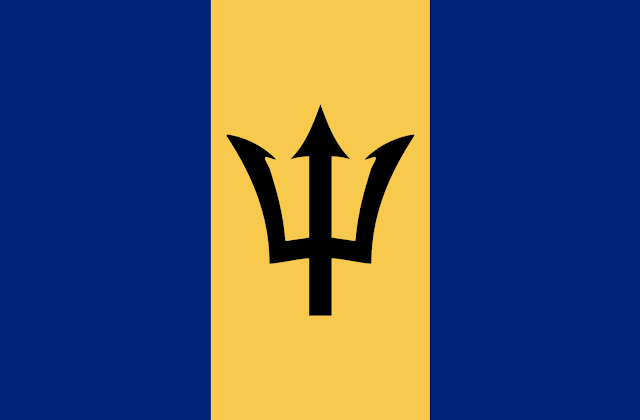
Barbados also declared itself a republic.


Princes Charles was there and as part of his speech he referred to the legacy of slavery in the Caribbean (which includes Jamaica):

"From the darkest days of our past, and the appalling atrocity of slavery, which forever stains our histories, the people of this island forged their path with extraordinary fortitude.

"Emancipation, self-government and independence were your way-points. Freedom, justice and self-determination have been your guides."

We also explored the importance of the lion to students, as the main character is told by his grandma that "lions always roar".

We referenced the imagery of the lion.

Rastfarianism is a religion which developed in Jamaica, and there is a character in the book called Brother Book who has the characteristic dreadlocks, which are also sported by Benjamin himself. Here's Bob Marley.

"Iron Lion Zion"

Present day musical legacy in Barbados is being maintained by Rihanna: who was declared as a National Hero as it became a republic.

Finally, here are some Windrush stories which I also referred to:

Friday, 7 January 2022

'Windrush Child' - a Q and A with the author

This video appeared just before Christmas, and I have used it with my Year 7 groups. The page it's hosted on includes an extract from the book and a range of other detail on this book.

Sunday, 19 December 2021

'WIndrush Child' - some additional resources

I am currently working through the first running of a new unit on 'Windrush Child' by Benjamin Zephaniah. When I posted about this I got a lot of interest from teachers wanting to know more and have a copy of the scheme of work. This often happens whenever somebody posts a new resource which has perhaps taken them many hours to create. 

It is something going back many years to before the existence of TES resources.

I may share some of the document at a later stage, but wouldn't share something that hadn't been pressure tested by being taught at least once.

The teaching is going well so far.

With the two groups I teach, I am currently around a third of the way through the book and Leonard has just arrived in Manchester to meet his dad and settle in to the city.

Sunday, 12 December 2021