Showing posts with label Primary Geography. Show all posts

Friday, 22 August 2025

Everyday Primary Geographies

A great new GA blog post from Jon Cannell outlining the many ways that Primary geography teachers can take confidence in their ability by being able to articulate the many ways that we (and young students) encounter geography in their everyday lives.


As Jon says, as geographers:

"we help connect, link, join and attach real world meaning to many of our lessons through sharing our experiences of people and place, making use of our personal geographies."

Sunday, 16 February 2025

Primary Geography article

Physical copies of the GA's journals arrived this week - not 'Geography' yet.

If you are a subscriber to ‘Primary Geography’ you will have been able to read my article on inclusion / exclusion in rural / urban spaces. 

Tuesday, 6 August 2024

Oak Primary Geography project - an update

By the start of September 2025 and the new academic year, a full suite of resources will be available for Primary Geography on the Oak National website. 

These will all be free to download.

There are 6 units for each of years 1-6. 36 units all fully resourced with slide decks, worksheets, quizzes and videos.

All units have been approved by Oak and will be appearing on the website in the next month.


They have been developed from an original model produced by Paula Owens and Julia Tanner by a team of writers and reviewers and a production team at the Geographical Association.

I am very pleased to have been part of the Oak Primary team. I wrote one unit, and helped shape a number of others through working as a reviewer.

Some of my images were also used in units.

Curriculum Explainer
Our curriculum nurtures pupils’ personal and everyday geographies, sparking their curiosity about the world, and guiding them to explore places and processes beyond their existing knowledge. 
Our curriculum is structured around carefully planned pupil progression, encompassing the knowledge and skills required by the national curriculum in a range of regional and thematic units. 
Key concepts and locations, including our local area, are revisited in increasingly complex contexts. Simultaneously, the curriculum imparts knowledge and skills of enquiry, mapwork, and fieldwork, whilst being contextualised and modelled throughout. 
This versatile curriculum connects learning to real-world contexts, empowering students with the knowledge to grapple with complex issues, such as climate change and sustainability, at both a local and global scale. 
The curriculum aims to enable pupils to know and understand more about the world, and view it through a geographical lens.

Here's my unit;

It includes some themes which will need to be tackled in various ways in many schools following the recent events in cities around the country.

And here are the subject principles...
  • Focuses on the knowledge and skills specific to geography, including:
    • World knowledge (encompassing locational, place, environmental, physical and human processes) developed through thematic and place-based studies at a range of scales;
    • How geographical knowledge originates and is revised.
  • Develops pupils’ knowledge and application of geographical investigation skills, including:
    • Using maps, Geographical Information Systems (GIS), spatial statistics, aerial and satellite imagery;
    • Using the fieldwork enquiry process and associated data collection, presentation and analysis techniques.
  • Develops understanding of contemporary geographical debates and real world challenges through organising, connecting and applying what they have been taught.

Thursday, 12 October 2023

New from Oak National

During the first COVID lockdown, teachers were faced with the job of rapidly putting new lessons into place, on a range of online platforms. The responses varied depending on the massively different school contexts they found themselves in, access to technology, home broadband speeds and data availability. For those in challenging circumstances, there were substantial problems to overcome, but teachers rose to the challenge.

One option which appeared in late April 2020 was Oak National Academy. 

This was a set of resources, including video lessons and supporting materials, which were produced by a team of teachers who were supported to create and share materials which could be used remotely. They were supported by the DfE and received a great deal of funding.

Resources were produced for a range of subjects including geography.

I took a look when the first few lessons launched, as did others, and they were problematic in their language and emphases. I blogged about them at the time.

They improved as time went on, and found a use not just during the lockdowns, but also when teachers returned to schools, or found themselves with hybrid learning for a while, with a stop-start school year, and pupils who were shielding or cautious of returning to in-person school settings. 

There was also some criticism that they were deskilling teachers. 

As a parent, I would also have been concerned if my children's teachers were relying on them too much for work, or homeworks. As the pandemic eased, some schools and teachers continued to use the resources, or direct certain people to them: home schoolers etc.

Having got used to using the resources, some teachers were disappointed when they were removed from the platform.

United Learning produced the Geography materials and disagreed with the decision to remove them.

On their website, they said at the time:

United Learning was pleased to be one of a group of partner organisations which came together to provide lessons for students and curriculum support for teachers through the pandemic. We believe that the trusts and schools which created Oak and provided the lessons performed a valuable national service at a time of crisis.

This was an independent, charitable activity led by schools and trusts in the national interest and supported by philanthropic funding. The partners were grateful for some government financial support, which accelerated production of video lessons. It was never a government project.

However, we think it is wrong for government to take over the Oak resources and do not support the creation of an NDPB to do so. There should not be a ‘government approved’ curriculum, nor any suggestion of one – whether presented as ‘optional’ or not.

As we do not think government should be getting involved in provision of lesson-by-lesson curriculum resources, we have declined the government’s offer of money to hand our resources to the new NDPB.

However, we are conscious that our resources – representing over 1,500 video lessons with associated curriculum plans and resources – are a core and popular part of the original Oak offer for teachers. We will thus continue to share these materials, free of charge, with any teachers or schools that wish to access them via a new site www.ContinuityOak.org.uk. This platform will be active as of 1 September and will be further developed as we receive feedback on the user experience.

Continuity Oak Geography Lessons


Since then, things have changed substantially within this area.

Oak was awarded a substantial multi-million pound sum of money to produce curriculum resources for a range of school subjects at both Primary and Secondary level over the next few years. The full suite was intended to be available by Summer 2024, but some subjects and key stages may be a little later than that due to delays in securing partners for particular subjects.

There have been quite a few opportunities for people to get involved in creating resources for these new fully resourced curricula. It will be interesting to see in the longer term whether this is a good investment and what the take up will be. There is also a 'danger' that this may become a default new 'national curriculum', although some may see that as a good thing. 


The GA was revealed as the partner for the Primary Geography materials a while back.

As with the other subject areas and phases announced by Oak, the primary geography curriculum sequence and initial resources will be available on the Oak platform from the autumn term of 2023, with materials being rolled out throughout the school year. A full package of curriculum materials is due to be completed by September 2024.

GA Chief Executive Alan Kinder said at the time:

“The GA is looking forward to working as one of Oak National Academy’s new curriculum partners. This partnership will enable us to further support a large number of teachers of primary geography throughout the country, through the provision of high-quality lesson materials and curriculum plans written by expert teachers from the GA’s subject community. This collaboration will therefore complement the professional services the GA already provides to its members in primary schools nationally.”

I've been working in a small part (so far) on the project, and have been involved in some of the Oak preparation for today's launch of the first examples. Please take a look...

A sample Primary unit is now up and available:


There will be regular additions for the next year.

Saturday, 26 November 2022

New Pearson support for Primary Geography and History

Mr. Parkinson has been reviewing this new resource from Pearson.

Curriculum making is an important part of any teacher's professional identity: engaging with the discipline, and developing pedagogical practice, while considering the particular nature of the school's context and the young people who sit in front of you to ensure their geographical experiences are not only educational, but also authentic and empowering.

According to Professor David Lambert,

"Curriculum making is the creative act of interpreting a curriculum specification and turning it into a coherent, challenging, engaging and enjoyable scheme of work, it is a job that really never ends and lies at the heart of good teaching."

For Primary practitioners and Secondary alike, developing a curriculum across a key stage is a lengthy and time-consuming process, which may result in several iterations over time. There are a lot of decisions to make in this work, and not all colleagues may have the time to do this within a particular academic year's cycle, or have opportunities to undertake the necessary reading and other preparation to be able to do this work justice.

For this reason, some teachers will turn to ready-made resources and schemes which are provided by a range of organisations. These are probably well known to many teachers, but Pearson have now stepped into this arena with an offering of their own.

Pearson has a great deal of experience in publishing curriculum resources, alongside supporting teachers with preparations for external examinations with textbooks. They have now produced and released a completely resourced scheme of work for Primary Geography (and also History), which includes all the resources that a school would need to begin to move towards a (possibly) new and consistent approach across the lower key stages, supported by planning materials, resources, regular assessment activities and classroom support for teachers engaging with the material for the first time. 
These resources are part of the Pearson Primary Extended Curriculum.


Pearson has spent a year working with staff at Reach Academy Feltham, Jon Hutchinson (Director of Training and Development at the Reach Foundation) and Emily Maule (Director of Humanities and Social Sciences at Reach Academy Feltham) to create a new, whole-school curriculum for Primary History and Geography.

You can take a look at the sample materials and find out more here if this sounds like it might be something to kick start or revitalise the geography in your school.


The resource is provided as a complete curriculum, including what Pearson calls “I know that...” and “I know how...” approaches, which "enable pupils to not only show they know and remember more, but also develop the conceptual and disciplinary knowledge they need to become young geographers."

Pearson's website explains that the new resources adopt a: "pedagogically rigorous approach, validated by the hundreds of classrooms who have clarified their intent, been supported through their implementation and seen evident impact." 

This approach has been trialled in a number of schools across the Reach Foundation before being made available more widely. This has doubtless ironed out many of the problems that are spotted when a new activity is given its first run through in an actual classroom with children.

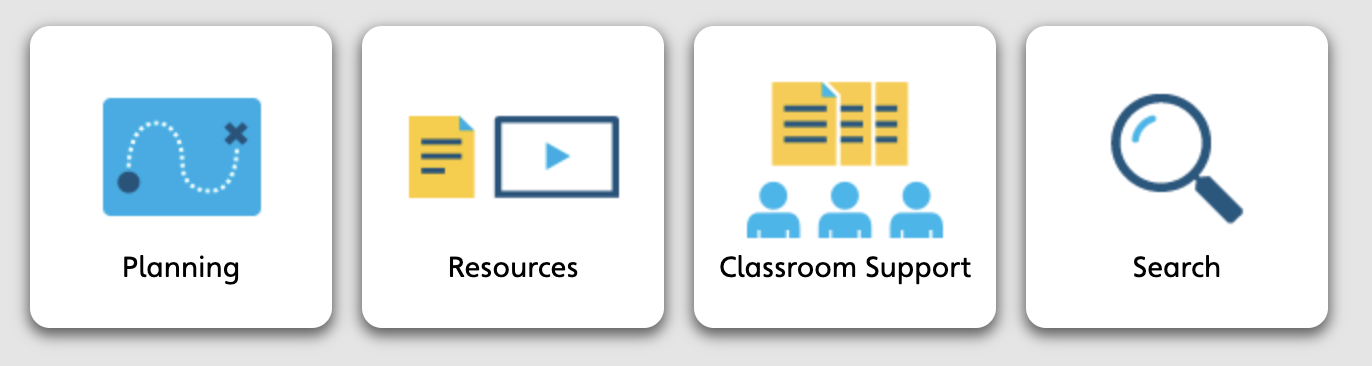
For each Unit, teachers can access planning materials and lesson plans, resources, printable activity booklets and assessments which can be completed in various ways. The Units are split up into 6 Sessions, with each one ending in a Unit Check Out, which forms a final review check or assessment. There are 3 Units for each Year, suggesting that combining them with 3 History topics would produce a year's worth of lessons. Resources can be located quickly using the search function.


A series of free sample lessons are provided - you can take a good look at a KS1 lesson on the UK, and a KS2 lesson on Rivers to see whether this might fit with your own existing curriculum, or take it a step further.

Sample lesson plans to accompany the resources can also be seen on the link above.

I've had a good look through the resources and supporting documents for geography.

There are some familiar topics which receive a fresh look, along with some interesting new areas of study - Year 6 will explore fast fashion, for example, alongside carrying out fieldwork. Year 4, for example includes Rivers (with a focus on the Volga), Migration (including a look at Windrush) and Natural Resources (with a located example of Chile and its copper mines).


In addition to the lesson materials there are Concept toolkits, which allow for the exploration of some of the key underpinning concepts of the Units. These concepts include Change and Location and Place. The materials here introduce strategies to organise class discussions, group work and decision making.

There is plenty of support for writing, such as the inclusion of structure strips for some of the key topics when extended writing is required, which are formatted ready for printing. 

Speaking of printing, there is likely to be a lot of printing required to disseminate the very thorough, but lengthy booklets for both pupils and teachers which accompany each Unit. The Year 4 Pupil booklet on the Migration Unit is 31 pages long, for example. Schools would need to factor in a photocopying budget. The booklets are provided in PDF format.
Each pupil booklet starts with a knowledge organiser (you may have your own views on those), and a learning review page to track progress through the Unit. Activities include labelling, cloze text passages, connecting boxes and sorting information as well as writing answers - generally quite short pieces of text, or capturing ideas. The accompanying Teacher booklets will give teachers confidence in what is required, and help pupils through each Session. Pacing is likely to be important here, and the amount of text and visuals may overwhelm some learners.

There is one problematic Unit entitled Slums, which I would not personally use given the language, and could usefully be rebranded as 'Homes: Near and Far', or something similar.
There are differing opinions about the use of the term 'slums' and I understand that Pearson did speak to subject experts and teachers before making the decision to use it. However, they are now consulting with teachers who have bought these resources and will use their feedback to decide whether to update the unit to avoid the term.

One possible omission from the resource is any multimedia material - such as videos which are aimed at use by pupils or teachers - the materials are quite 'static' and a few animations or sound clips with effects would have been helpful for a Primary audience. 

There are some videos included, but these are restricted to teacher briefings for each unit from the project's lead: Jon Hutchinson.
In the video below, for example, he talks about the approach that has been taken and the work that has been done so far, which may sound like something that you would find develops your current practice. If so, it would be worth taking out a trial subscription.


This approach will not be for everyone, but given the nature of the profession, as we reset after COVID19 and face other challenges with recruitment and recent financial crises, support of this kind will be welcomed by many.
The Cambridge Primary Review is also a little cautious of the approach taken by some schools and Trusts, suggesting that  "children will not learn to think for themselves if their teachers are expected merely to do as they are told."

It is the consistency of approach, format of materials and connection with cognitive science that will provide the appeal for many Primary colleagues.

There will likely be different approaches to using the resources which will probably include adapting them or including a few additional resources such as videos or music.

You can request a FREE TRIAL, and this may be a useful first step to see whether the resources are going to be the answer to your current problems, or a support for colleagues.

Trials run for one month - International schools have two months.

The price to access the Primary Geography content is £400-£450 a year. The current increases in energy and staffing costs mean this will require a careful investment decision. Subscription to the content provides school access to the online content for 12 full months from the date of registration. Teachers accessing the resources via a subscription of this kind must of course be from the same school and use their school email addresses.

For those who want to pair up the Geography content with the History content, the price is £800 for the year for both.

I've also taken a look at the Primary History content, and the structure and focus for each unit is consistent with the Geography content, to provide a consistent experience across the Humanities in schools that go for that option, particularly where teachers may not be subject specialists.

There are also supporting Professional Development courses available through to May 2024, led by John Hutchinson for those who want an additional level of support in finding out how to use the resources to the greatest advantage.


Thanks to KS2 colleagues at King's Ely Junior for their comments on these resources which helped to produce this post.

Saturday, 30 July 2022

Primary Geography research report published

A rather comprehensive research document focussing on Primary Geography has been published and is being hosted on the GA website.

The research was based on the GA's Primary Geography Quality Mark, and looked at outcomes from this. I'm delighted to have been part of the moderation team for the Quality Mark for quite a few years now - at least eight I think. I've also been part of the Secondary Quality Mark moderation team since the beginning - going back to before the Action Plan for Geography.

Click the link to download the report as a PDF.

There's an excellent authoring team for the report:

Professor Simon Catling – Professor Emeritus of Primary Education, Oxford Brookes University, GA President 1992–93 

Kate Glanville – Senior lecturer in geography education, Birmingham City University 

Jeremy Krause – Education Consultant, GA President 2001–02 

Jen Lomas – Primary school teacher and geography subject leader, London 

Dr Paula Owens – Geography Education Consultant, previously GA primary lead 

Steve Rawlinson – Geography Education Consultant, GA Former President 2015–16, Primary Geography journal Board Chair 

Dr Sharon Witt – Geography Education Consultant

This will be of particular value to those schools which are applying for the PGQM in the future, as it provides a wealth of information about the feedback given by moderators and what we are looking for in top quality Primary Geography. Congratulations to all the author team.

Tuesday, 21 January 2014

One for the early years at King's Ely

Really useful post and resource for those teaching Primary Geography.
A new set of characters called the Go Jetters who teach young people about key geographical ideas.


Geography helps children to make sense of their world. Very young children are naturally curious, and they love to actively explore the world around them, noticing all kinds of detail. That’s why they need to develop geographical vocabulary like the names of places, people and things, and the words needed to describe and locate them.
It helps to think of children as little geographers – they each have their own world of private geographies  - the places they name for themselves with meanings that only they understand: the dens where they hide out with their friends, special meeting places in the school playground. Whether they’re playing in the back garden, or splashing through a muddy puddle on the way to school, children are intrepid explorers making new (to them) discoveries about the world every single day. 
Check them out...

Meet Kyan, Xuli, Foz and Lars; four adventure-seeking superhero Go Jetters who live high above the clouds, and love to explore new places all around planet Earth.

Mentored by a disco-loving unicorn named Ubercorn, the Go Jetters accept any mission and tackle challenges head on through problem-solving, teamwork and amazing inventions.