Thursday, 27 January 2022

The GA's National Research Report - now available

Download a copy of the report here.


The Geographical Association (GA) published a national research report today, focused on the professional needs and views of teachers of geography. 

The report presents the findings from a two-stage ‘listening exercise’, comprised of an online survey and a series of focus group discussions with geography educators from the primary, secondary and post-16/HE phases and from Initial Teacher Education (ITE).


The most consistent finding of the research is that subject-specialist issues are a key concern for all those involved in geography education, primary geography subject leaders, secondary practitioners early in their career, experienced secondary school heads of geography and geography ITE tutors. It concludes that more action is needed to meet the demands of geography educators for support with subject-specialist knowledge, skills, confidence and connections. The research also:

• points to the significant impacts of the COVID-19 pandemic on geography education, highlighting that these impacts vary greatly from school to school and between individuals

• identifies what geography teachers value about their professional subject association, particularly their desire to network with one another

• emphasises the relevance of global environmental and social issues to geography and the need for the geography education community to respond to these issues.

GA Chief Executive Alan Kinder said:


‘This GA National Research Report has been a year in the making and I’d like to thank all those GA members and others who gave their time towards such an insightful exercise. With a growing membership, the GA needs to work ever-harder to listen to and represent the views of its members. This report distils a huge range of ideas and makes recommendations for the GA, for policy-makers, for school leaders and teachers of geography. Our next challenge will be to pursue these findings and recommendations, so that children and young people in schools everywhere benefit from the improved support we are able to provide to teachers of geography, nationally and internationally.’


I was pleased to have played a part by facilitating one of the focus groups. Thanks to all those members and non-members alike who contributed to the fnal report, and particular thanks to Dr. Emma Rawlings-Smith and Alan Kinder who co-authored the report and to all those involved at various stages in its production.

The TES has picked up on the fieldwork issue for newly qualified teachers, which has been missing from many ITE courses:

Tuesday, 25 January 2022

Immigration and Empire

Adding this book to our departmental library.

A global history of post-War migration and the changes in Britain since 1945. 


Sunday, 23 January 2022

'Windrush Child' - podcast resource on migration

While looking for something else for my planning I came across this set of podcasts from the Migration Museum.

The Migration Podcasts have been created and compiled ready for sharing. They are hosted on Soundcloud which makes them quite easy to share.

They are on a range of themes, and can be added to the list of possible podcasts for the morning commute.

What would it take for you to leave your home? To leave everything and everyone you know to move to another country and start again. Over the past 400 years, that’s exactly what millions of British people have been doing. Today, the news headlines are full of stories of migrants trying to come to Britain. But for most of this country’s history, it’s actually been the other way round. And Britain’s emigration rate remains one of the highest in the world. Why has such a small island nation produced so many migrants and how have they shaped the world we live in today? In our new podcast series, Mukti Jain Campion speaks to people who are shedding new light on this often hidden history.

Listen and subscribe to Departures on Spotify, Apple Podcasts, Google Podcasts or wherever you get your podcasts by searching for ‘Departures 400 Years of Emigration’.

This podcast accompanies the Migration Museum’s exhibition Departures: 400 Years of Emigration from Britain.

They are presented by Mukti Jain Campion.

Here's the most recent episode:
Here's episode 4

The 17th century colonisation of North America and the Caribbean by emigrants from the British Isles was, almost from its beginning, dependent on the brutal forced transatlantic migration of millions of enslaved African people. Their labour made possible the industrial-scale production of lucrative crops such as tobacco, sugar and cotton which created the wealth, not just of individual British plantation owners, but of much of the wider British economy. Much of this history has remained hidden and only very recently have serious attempts begun to investigate and acknowledge the role that slavery played in Britain’s wealth, power and influence. But what if those investigations lead to your own front door and start to shatter your family myths?

Mukti Jain Campion explores this dark strand of British emigration history with Professor Matthew Smith, Director of the Centre for the Study of the Legacies of British Slave-Ownership at University College London; Madge Dresser, Honorary Professor of History, Bristol University and author of Slavery Obscured; Oliver Colegrave and his father Stephen Colegrave, co-founder of the Byline Times; and Sally Hadden, Associate Professor of History, Western Michigan University and author of Slave Patrols: Law and Violence in Virginia and the Carolinas.

'Windrush Child' - other arrivals

We are working through first teaching of the 'Windrush Child' book, based on Benjamin Zephaniah's own family history and the experiences of the Windrush Generation.

The Spotify playlist has been growing, as we have moved through a few different periods of the book, and music is referenced.

It can be seen (and listened to) here.

In the middle section of the book, Leonard's family move to share a house with a family called the Barry's.

They are from Ireland and we are told that they also moved to England for "a better life" and more options.

The Irish diaspora has taken many different forms over the years and occurred for various reasons historically.

There was large scale emigration during the 1940s and 1950s.

This University College Cork website refers to the 1950s in Ireland as being described as a period of "doom and gloom" or "the lost decade".

Agriculture, the traditional mainstay of the Irish economy, continued to decline throughout the 1950s. The state dedicated insufficient effort to developing new industries to fill the gap created by the demise of, in particular, of the small farm rural economy. As a consequence, little work was available for thousands of young people coming of age. Unemployment remained high throughout and it was estimated that from 1949 to 1956, real national income rose by only 8 per cent, at a time when the average increase in European equated to approximately 40 per cent.

Final trivia for you:

I was reading today that Bob Marley's wife was called Rita, the same name as Leonard's mum.

Monday, 17 January 2022

King's Ely ISI Report now published


We had a visit from ISI to King's Ely in November 2021, and are now able to share the outcome - a very pleasing one for the whole school community.

Download the report as a PDF from here. 


A few mentions for geography in there.

Sunday, 16 January 2022

D3 Teacher Training Modules

D3 is an ERASMUS project which explores the use of open data and develops Digital Data Literacy in young people. The final stage is to use those new skills to investigate the local area and come up with some suggestions for change.

We are always interested in views on the training modules that we have put together as part of the D3 ERASMUS project.

Let me know if you have taken a look.

Also let me know if you are interested in finding out more, or getting more involved.

Friday, 14 January 2022

'Windrush Child' continued...

Year 7 are continuing to explore the book...

I posted on Twitter recently about a new unit which I am developing based on the Benjamin Zephaniah book 'Windrush Child'.

This has been going quite well, and there are likely to be a number of posts as I work through it for the first time. I've already started to add a few more elements to it and notice some clarifications that are needed for the original booklet that I created, for the 2nd edition in the next academic year.

As always, as soon as a new unit is started, stories begin to emerge which are related to it. It's amazing how often that happens.

Several weeks ago, the continued issues of the Windrush Generation to get proper compensation for their plight was on the front page of one national newspaper.

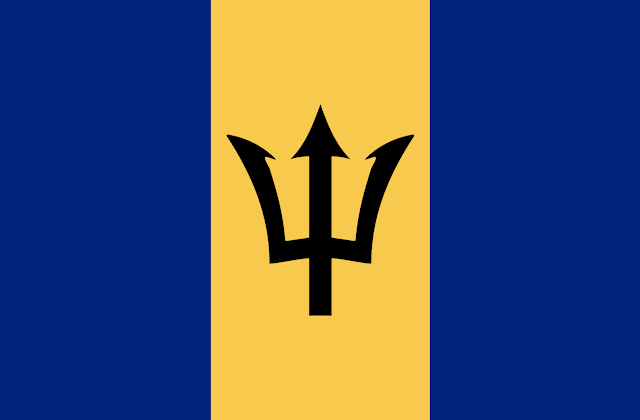
Barbados also declared itself a republic.


Princes Charles was there and as part of his speech he referred to the legacy of slavery in the Caribbean (which includes Jamaica):

"From the darkest days of our past, and the appalling atrocity of slavery, which forever stains our histories, the people of this island forged their path with extraordinary fortitude.

"Emancipation, self-government and independence were your way-points. Freedom, justice and self-determination have been your guides."

We also explored the importance of the lion to students, as the main character is told by his grandma that "lions always roar".

We referenced the imagery of the lion.

Rastfarianism is a religion which developed in Jamaica, and there is a character in the book called Brother Book who has the characteristic dreadlocks, which are also sported by Benjamin himself. Here's Bob Marley.

"Iron Lion Zion"

Present day musical legacy in Barbados is being maintained by Rihanna: who was declared as a National Hero as it became a republic.

Finally, here are some Windrush stories which I also referred to:

Wednesday, 12 January 2022

Thwaites Glacier - Year 8 work

The Thwaites glacier in Antarctica was in the news just before Christmas. There are worrying signs regarding its stability. The glacier is about the size of Germany, and if it was to melt it might lead to the collapse of parts of the West Antarctic Ice Sheet (WAIS)

The news last week were reporting on the start of the two month expedition to survey the stability of the glacier using a remote vessel called Boaty McBoatface.

We are following the expedition with Year 8 groups.

There has beens some coverage in the BBC News as well.

Friday, 7 January 2022

Project Godwit

Every day on the way to work in Ely, I pass the turning to Welney Wetland Centre.

This is operated by the Wildfowl and Wetland Trusts, and is famous for its floodlit swan feeding sessions, amongst other things. They are currently involved in Project Godwit: a five-year EU Life funded project that is aiming to secure the future of breeding black-tailed godwits in the UK through habitat management, research, supplementing the population through headstarting, and engaging local communities. 

Project Godwit is a partnership between RSPB and WWT with major funding from the EU LIFE Nature Programme, the HSBC 150th Anniversary fund, Natural England, the Heritage Lottery Fund, through the Back from the Brink Programme, and Leica UK.

The project aims to secure the future of black-tailed godwits in the Fens.

 
www.projectgodwit.org.uk

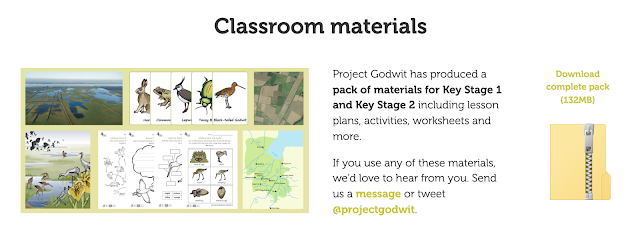
The project has already created a series of educational resources for KS1 and 2 students, which cover quite a few subjects including Geography. They can be viewed here.

They will be perfect for our Year 4 unit on The Fens.

'Windrush Child' - a Q and A with the author

This video appeared just before Christmas, and I have used it with my Year 7 groups. The page it's hosted on includes an extract from the book and a range of other detail on this book.

Wednesday, 5 January 2022

Endurance 2022

Today is the centenary of the death of 'The Boss': Sir Ernest Shackleton back in 1922.


One of the greatest survival stories in history involved the rescue of the crew of 'Endurance' after the ship sank in the ice during the Trans Antarctic Expedition he was leading. Shackleton led a march on the sea ice, a boat journey to Elephant Island, and then a trip in the James Caird through stormy seas which were peerlessly navigated by Frank Worsley, before an unprecedented first crossing  of the mountain range on South Georgia.

An expedition is heading off once again this year to try to locate the Endurance, using coordinates which were calculated for the location of the ship before it sank.

Check out the existing RGS-IBG Module.

I will be keeping my eye on the progress of this expedition.

Thursday, 30 December 2021

Routes Journal

This is the 2nd issue of the 2nd volume of the ROUTES journal.


Routes is a peer-reviewed digital journal for sixth form and undergraduate geographers looking to read and publish geographical knowledge.

They publish work from all areas of geographical scholarship, including both human and physical geography.

Routes is a free, open-access journal with no pay-walls or subscriptions.

It is free to submit and review work for Routes and there are no deadlines for submission.

Well worth seeking out, particularly as I am pleased to have an article in the journal of my own research into the people who have previously held the position of GA President.


The editorial for the issue is here.

Well done to the other contributors to this issue as well:

Examining the impact of the East Coast Low Storm, June 2016 on Narrabeen-Collaroy Beach, Sydney, Australia

Anna Pennington (Teacher of Geography at Pangbourne College)

Landscape assessment: A useful tool for A Level enquiry

By Edward Jones (Geography Teacher at Buxton Community School)

Walking in Paris: locating hidden sights in the city

By Emily Chandler (Geography Teacher at St George’s The British International School – Düsseldorf Rhein-Ruhr)

I particularly like this article as it connects with some of the influences of my GA Presidential theme of 'Everyday Geographies'.


The importance and relevance of geographies of wellness to A Level independent research

By Charlotte Fulham (Geography Teacher at Bedford Free School)

Why not suggest to your students that they write and submit an article for a future issue - all the information on how to do that is on the Routes website.

Thanks to editors Cyrus Nayeri and Lizzie Rushton, and the peer reviewers and to all those who have supported the journal in various ways, including submitting articles.

Cite my article as shown below:

Parkinson, A. (2022) Researching the changing professional profile of the Geographical Association’s Presidents 1893-2021. Routes 2(2): 67-79

Friday, 24 December 2021

Merry Christmas

Thanks to all those who've visited and read the blog this year.

Image by the wonderful Eric Ravilious - 'Considerable falls of snow' - not sure we will get them this year at Christmas time...

Stay safe and take care of yourself - see you in 2022


Sunday, 19 December 2021

COP 26

Ahead of the COP26 conference, I was interviewed by students from Lesmahagow School in Scotland for part of the Green Room offering.

The interview was used in a newsroom resource.

There's some strange formatting and sequencing of what I said here, but the key messages come through I think..


Not sure about the description here, but I'll take 'prominent scientist'...